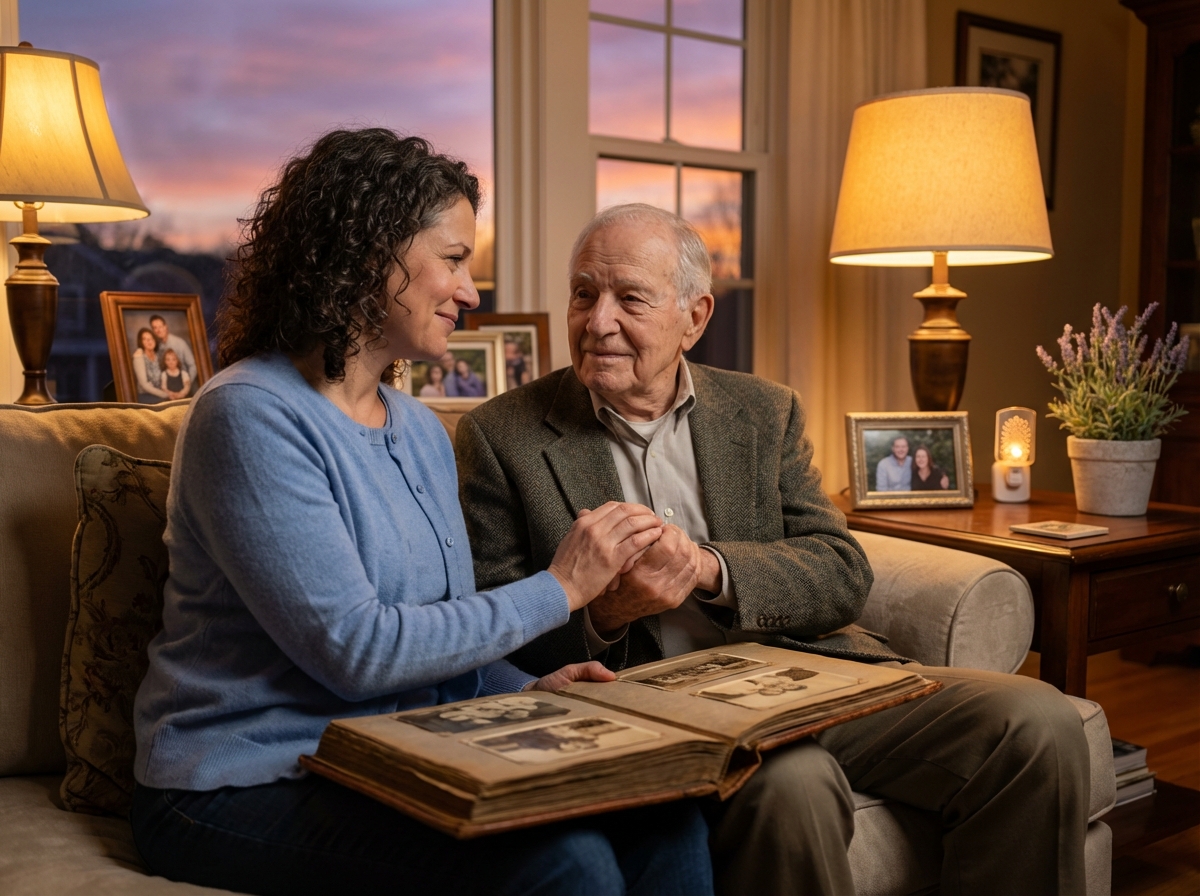
Sundowning — increased confusion, anxiety or agitation at dusk — is common in dementia and can be the hardest part of home care. This article explores why twilight agitation happens, how to adjust routines and environments, and which communication techniques and ready-made conversation starters calm evenings and improve safety and connection for family caregivers supporting a loved one at home.
Understanding Sundowning and Evening Agitation
Sundowning is a term many families learn through difficult evenings. It describes the period in the late afternoon when a person with dementia becomes more confused, anxious, or restless. This is not just a simple case of being tired at the end of the day. It is a complex shift in behavior that affects a huge number of people. Research suggests that sundowning may affect as many as 80% of dementia patients in long term care settings. At home, the numbers are also high. With the risk of developing dementia at any time after age 55 among Americans at 42 percent, millions of families are now dealing with these evening challenges.
The Biological Drivers of Evening Agitation
The brain relies on an internal clock called the circadian rhythm to manage sleep and wake cycles. In people with Alzheimer’s or other forms of dementia, the part of the brain that controls this clock often degrades. This leads to significant sleep fragmentation. The body may stop producing enough melatonin, which is the hormone that signals it is time to rest.
Another factor involves neurotransmitters. During the day, the brain uses chemicals like norepinephrine to stay alert. In a healthy brain, these levels drop in the evening. In a brain with dementia, these levels can plateau at a high point. This creates a state of hypervigilance. The person feels like they need to be on guard or move constantly. They cannot manage the adrenergic input to the brain. This often starts shortly after lunch and builds until the sun goes down. Fatigue makes everything worse. Processing a world that no longer makes sense takes immense mental energy. By late afternoon, the brain is exhausted. This exhaustion lowers the threshold for frustration.
Environmental Triggers and Sensory Overload
The physical environment plays a major role in evening agitation. As the sun sets, the quality of light changes. Low light creates long shadows. To someone with cognitive decline, a shadow on the floor might look like a hole or a person standing in the corner. This causes immediate fear.
Sensory overload is another common trigger. The evening is often a busy time in a household. There might be noise from the television, the sound of dinner being prepared, or people coming home from work. For a person with dementia, these sounds can become a chaotic jumble. They cannot filter out the background noise. This leads to irritability or a desire to escape the room. Transitions also cause stress. Moving from one activity to another or changing rooms can feel disorienting when the brain is already struggling to keep up.
Recognizing Behavioral Signs
Sundowning looks different for everyone. Some people become very quiet and withdrawn. Others become physically active. Common signs include
Increased Confusion
The person may forget where they are or who the people around them are, even in a familiar home.
Pacing and Restlessness
They might walk back and forth or try to leave the house. This is often linked to a desire to “go home” to a place from their past.
Irritability and Combativeness
Small requests can lead to outbursts of anger or crying.
Hallucinations
They may see or hear things that are not there. This is especially common when lighting is poor.
Sleep Disturbances
The agitation can extend through the night, making it impossible for the person to stay in bed.
Risk Factors and Prevalence
Certain factors make sundowning more likely. Advanced age is the primary risk factor. Vision loss is another major contributor. If a person cannot see clearly, the dim evening light is even more terrifying. Chronic pain often goes unnoticed in people with dementia. They may not be able to say they hurt, so the pain comes out as agitation.
According to the NIH research on sundowning syndrome, the prevalence can range widely depending on the setting and the severity of the dementia. It is most common in the moderate to severe stages of Alzheimer’s, and research indicates a correlation between frequent sundowning and a faster rate of cognitive decline. Seasonal changes also matter. Symptoms often get worse in the fall and winter when daylight hours are shorter. This is sometimes linked to seasonal affective disorder, which affects about 5 percent of the population.
Distinguishing Sundowning from Medical Emergencies
It is vital to know the difference between typical sundowning and acute medical problems. Sundowning follows a predictable pattern. It happens at the same time most days and subsides by morning. Delirium is different. It is a sudden, severe change in mental state.
| Feature | Sundowning | Delirium |
|---|---|---|
| Onset | Gradual, usually in the evening. | Sudden, can happen any time. |
| Pattern | Predictable and repetitive. | Fluctuates wildly throughout the day. |
| Medical Signs | Usually no fever or physical illness. | Often accompanied by fever or infection. |
| Duration | A few hours each evening. | Lasts days or weeks until treated. |
Red Flags for Immediate Evaluation
Caregivers should watch for specific red flags. If you see these signs, contact a doctor or seek emergency care immediately
Sudden Change in Behavior
If the agitation starts abruptly and is much worse than usual, it is not typical sundowning.
Fever or Chills
This often indicates an infection, such as a urinary tract infection. UTIs are a leading cause of sudden confusion in the elderly.
Signs of Dehydration
Look for a very dry mouth or dark urine. Dehydration can cause rapid cognitive decline.
Stroke Symptoms
Watch for facial drooping, arm weakness, or sudden difficulty speaking.
Severe Delirium
If the person is completely unable to focus or is extremely drowsy, they need a medical evaluation.
Understanding these drivers helps caregivers stay patient. It is not a choice the person is making. It is a biological response to a changing environment and a tired brain. Recognizing the triggers is the first step toward creating a calmer evening.
Designing the Evening Environment and Routine to Prevent Agitation
Managing the physical environment is a powerful way to reduce evening agitation. Light is the most important tool for regulating the internal clock. During the morning hours, exposure to bright, full-spectrum light helps set the brain’s rhythm. You can use 10,000 lux light boxes for 30 minutes to achieve this effect. As the sun begins to set, the lighting inside the home should change. Switch to warm, soft lamps that sit low in the room. This prevents the harsh shadows that often cause fear or confusion in people with dementia. Glare on shiny floors can look like water or holes. Use matte rugs to cover these areas. Close the curtains before dusk to stop the windows from becoming mirrors. Reflections can be terrifying for someone who no longer recognizes their own face.
Dietary choices impact evening behavior significantly. Stop all caffeine intake by 2 PM. Sugar should be limited after 3 PM to avoid energy spikes that lead to restlessness. Serve the main evening meal around 5 PM. A meal with a balance of protein and complex carbohydrates can help maintain steady blood sugar levels. If your loved one needs a snack before bed, warm milk or a small piece of whole-grain toast is a better choice than sweets. Dehydration often mimics or worsens confusion. Offer small sips of water throughout the day but limit large drinks right before bed to reduce nighttime bathroom trips.
The tempo of the house must slow down as evening approaches. Noise levels should stay below 50 decibels. Turn off the television by 7 PM because news programs or loud movies can be overstimulating. Use a white noise machine if the street sounds are too loud. Household chores like vacuuming or clattering dishes should be finished before dusk. A quiet home signals to the brain that the day is ending.
Physical activity during the day promotes better sleep at night. A 20 minute walk in the morning or early afternoon provides necessary daylight. If a nap is needed, keep it under 30 minutes. Ensure all naps happen before 3 PM. Late afternoon sleeping often disrupts the nighttime schedule. Maintaining a strict daytime routine helps manage the adrenergic input that causes hypervigilance later in the day.
Safety is a major concern during the evening hours. Secure all exits with high or low deadbolts that are out of the direct line of sight. Keep pathways 36 inches wide to prevent trips. Remove all throw rugs. Install motion-sensor nightlights that use a red spectrum. Red light does not disrupt melatonin production like blue or white light does. Place these lights every five to ten feet along the path to the bathroom.
Low-stimulation activities provide a sense of purpose without causing stress. Folding warm towels is a rhythmic, familiar task. It keeps the hands busy and provides a feeling of productivity. Playing music at 60 to 70 beats per minute can lower the heart rate. Choose familiar songs from the person’s early adulthood. Aromatherapy with lavender oil may help some people. Use two drops in a diffuser but watch for any signs of respiratory irritation. Avoid strong scents if the person has a history of allergies.
Medication timing is a conversation to have with a doctor. Some medications for blood pressure or bladder control can cause nighttime wakefulness. Ask about moving these to the morning. Light therapy or melatonin supplements are options for some families. Melatonin doses of 1 to 5 mg are common for sleep onset. However, caution is required with pharmaceutical interventions. Antipsychotic drugs are occasionally used but carry a black box warning for elderly patients with dementia due to an increased risk of stroke or death. Sedatives might help with sleep but often cause grogginess, increasing fall risk. Always consult a clinician before starting supplements or adjusting prescriptions.
Sample Evening Schedule
| Time | Activity |
|---|---|
| 6.00 PM | Evening meal with soft background music and warm lighting |
| 7.00 PM | Low-stimulation task like folding laundry or looking at photo albums |
| 8.00 PM | Personal hygiene and changing into comfortable pajamas |
| 9.00 PM | Reading together or quiet conversation in a dimly lit room |
| 9.30 PM | Bedtime with nightlights active and exit sensors turned on |
Evening Readiness Checklist
Environment Check
Close the curtains before the sun goes down to prevent reflections. Turn on warm lamps. Remove clutter from the floor and ensure all walkways are clear.
Physical Needs
Check for signs of pain or hunger. Ensure the bathroom was used recently. Offer a small glass of water to prevent nighttime thirst.
Sensory Control
Lower the volume on all devices. Speak in a calm, quiet voice. Use a lavender diffuser if the person finds the scent relaxing.
Safety Measures
Lock the exterior doors. Check that the bed alarm is set if one is used. Ensure the path to the bathroom is lit with red-spectrum nightlights.
Core Communication Principles for Calmer Evenings
When the clock hits late afternoon, the way we speak becomes just as important as the lighting in the room. This shift in behavior, often called sundowning, affects a huge number of people living with memory loss. Communication during these hours requires a different set of tools than those we use during the morning. The goal is no longer to exchange information or complete tasks efficiently. Instead, the goal is to provide emotional safety.
The Power of Validation Over Correction
One of the most effective tools for managing evening agitation is validation therapy. This approach focuses on the emotional truth of what a person is saying rather than the factual accuracy. If a loved one insists they need to go home to their mother, telling them their mother passed away years ago will only cause fresh grief and more agitation. Instead, acknowledge the feeling behind the request. You might say that you understand they miss home and feel a bit lost right now. By validating the emotion, you meet them in their reality. This reduces the need for them to argue or defend their position. It creates a bridge of trust that makes redirection much easier later on.
Verbal Mechanics for De-escalation
The physical way you speak matters as much as the words you choose. During the evening, the brain struggles to process complex information. Use short, simple sentences. Stick to one idea at a time. If you give a three step instruction, the person will likely forget the first two by the time you finish the third. Lower your voice volume. A soft, steady tone acts as a natural anchor for someone who feels like their world is spinning out of control. Slow down your pace of speech. Rapid talking can sound like a series of demands or even threats to a confused mind.
Non-Verbal Alignment and Body Language
Your body often speaks louder than your voice. If you are standing over a seated person while telling them to relax, your physical presence is sending a message of dominance. Try to get at eye level. This feels less intimidating. Match your facial expression to the tone of the conversation. If they are sad, a giant, fake smile can feel dismissive or confusing. A calm, neutral, and empathetic expression is usually best. Keep your hands visible and avoid crossing your arms. Open body language signals that you are a partner in their care, not an adversary.
The Name as an Anchor
Using the person’s name frequently helps maintain their attention. It acts as a gentle cue that the conversation is for them. In the middle of a confusing evening, hearing their own name can provide a brief moment of clarity and identity. Avoid using generic terms like “honey” or “sweetie” if they seem particularly agitated. Sometimes these terms can feel patronizing to an adult who is already frustrated by their loss of independence.
Avoiding the Memory Test
One of the biggest triggers for evening agitation is the “quizzing” habit. Caregivers often ask questions like “Do you remember what we did today?” or “Who is that in the picture?”. For someone with dementia, these questions feel like a test they are failing. This leads to immediate anxiety. Instead of asking them to remember, provide the information yourself. You can say that it was nice visiting the park this morning. This allows them to participate in the conversation without the pressure of performing a cognitive task.
Stage-Appropriate Communication Adjustments
Communication needs to evolve as the condition progresses. In the mild stages of dementia, you can still offer limited choices. Asking “Would you like the blue sweater or the red one?” gives them a sense of control. However, in moderate to advanced stages, even two choices can be overwhelming. At that point, it is better to use gentle, direct statements. Instead of asking if they are ready for bed, you might say that it is time to go to the bedroom now.
Cultural Sensitivity and Language Shifts
In bilingual households, it is common for a person with dementia to lose their second language first. They may revert entirely to their native tongue during the evening hours. Even if you do not speak that language fluently, using a few key phrases can be incredibly soothing. It taps into their oldest, most deeply rooted memories. Respecting cultural norms regarding personal space and eye contact is also vital. Some elders may find direct, prolonged eye contact disrespectful or aggressive. Adjust your approach based on their lifelong values.
The Therapeutic Use of Touch
When words fail, touch can communicate safety. A gentle hand on the shoulder or holding their hand can lower cortisol levels and slow a racing heart. Always watch for their reaction. If they pull away, respect that boundary immediately. For many, a rhythmic pat on the hand or a soft rub on the back provides the sensory input they need to feel grounded in the moment.
| Strategy | The Do | The Don’t | Rationale |
|---|---|---|---|
| Validation | Acknowledge the feeling. | Correct the facts. | Correcting causes conflict; validation builds trust. |
| Sentence Length | Use 5-7 words per sentence. | Use complex explanations. | Short sentences are easier for a tired brain to process. |
| Choice Making | Offer two clear options. | Ask open-ended questions. | Open questions cause “choice paralysis” and anxiety. |
| Voice Tone | Keep it low and slow. | Raise your pitch or volume. | High, fast speech signals an emergency to the brain. |
| Redirection | Suggest a new activity. | Tell them to “stop” a behavior. | Telling someone to stop often increases the behavior. |
By mastering these core principles, you create an environment where communication is a bridge rather than a barrier. This sets the stage for using specific scripts and activities to navigate the most difficult hours of the day.
Ready Conversation Starters and Short Scripts for Evening Situations
Having a set of ready phrases helps reduce the panic that often comes with evening agitation. These conversation starters and communication strategies for dementia care provide a way to connect when words become difficult. Using specific scripts allows you to respond with calm confidence. This approach helps lower the emotional temperature for everyone in the home.
Waking Disoriented or Asking to Go Home
This scenario often happens as the sun sets. The person may feel they are in the wrong place. They might feel a strong urge to “go home” even if they are sitting in their own living room. This is a common sign of sundowning. At home, the feeling of being lost can be very intense.
Ready Lines for Disorientation
I hear you. You want to go home.
You are safe here with me.
It is dark and cold outside right now. Let’s stay here where it is warm.
I will stay with you until you feel better.
Tell me about the house you grew up in.
Would you like the blue blanket or the green one?
I am right here. I am not going anywhere.
Let’s have a small snack while we wait for the rain to stop.
I love this house because you are in it.
Let’s sit in the big chair and rest for a moment.
Sample Dialogue
Loved One. I need to go home. My mother is waiting for me.
Caregiver. I can see you really want to get there. It is late, so the buses are not running. Let’s have some tea while we wait.
Expected Outcome. The person feels heard. They stop trying to leave the house. They focus on the tea.
Fear or Seeing Things Not Present
Hallucinations or illusions can be terrifying. Shadows on the wall might look like people. A coat on a rack might look like an intruder. This often happens because the brain struggles to process low light. Validation is the most important tool here. Never argue about what they see. Acknowledge the feeling behind the vision.
Ready Lines for Fear
That sounds very scary.
I don’t see the person, but I can see that you are upset.
I will stay right here to keep you safe.
Let’s move into the kitchen where the light is brighter.
I am going to close these curtains so we can be cozy.
Would you like to hold my hand?
Let’s listen to some soft music together.
I will check the door to make sure it is locked.
You are safe. I am here.
Let’s look at these pictures of your garden.
Sample Dialogue
Loved One. There is a man standing in the corner.
Caregiver. That must be frightening. I will turn on this lamp to see better. I am right here with you.
Expected Outcome. The extra light removes the shadow. The person feels protected by your presence.
Repetitive Questions About Schedule or Items
Anxiety often manifests as a loop of questions. The person may ask about dinner every two minutes. They might worry about a lost wallet or keys. This is a sign they are looking for a sense of control. With Alzheimer’s Disease Facts and Figures showing millions of families facing these moments, you are not alone in this frustration.
Ready Lines for Repetition
Dinner will be ready at six o’clock.
I have your wallet safe in my pocket.
We are staying home tonight. We are safe.
Let’s look at the calendar together.
I will keep track of the time for us.
Would you like to help me fold these napkins?
Tell me about the best meal you ever cooked.
I have everything under control.
Let’s try a piece of this chocolate.
You are doing a great job helping me.
Sample Dialogue
Loved One. When are we eating? Is it time to eat?
Caregiver. We are eating soon. Would you like to help me set the table or should we listen to the radio?
Expected Outcome. The person feels useful. The activity breaks the loop of the question.
Pacing and Restlessness
Sometimes the agitation is physical. The person cannot sit still. They pace the hallways. This can lead to falls or exhaustion. Instead of forcing them to sit, try to join the movement. Redirect the energy into a safe activity.
Ready Lines for Restlessness
You have a lot of energy tonight. Let’s walk to the window and look at the moon.
I love the way this lavender lotion feels. Would you like some on your hands?
Can you help me sort these socks by color?
I feel like singing. Do you remember the words to this song?
Let’s try sitting on this soft cushion for a minute.
You look like you are looking for something. Can I help?
Let’s take a slow walk to the kitchen for some water.
Agitation Triggered by Noise or Visitors
Too much stimulation can cause a meltdown. Multiple voices or a loud television can be overwhelming. The person might become irritable or angry. The goal is to reduce the sensory input immediately.
Ready Lines for Overstimulation
It is a bit loud in here. Let’s go to the quiet room.
I am going to turn the television off for a while.
Would you like to wear these soft headphones?
It is okay to say goodnight to our guests now.
Let’s find a peaceful spot to sit.
I will tell everyone we need a little quiet time.
Would you like to go upstairs where it is calm?
Let’s take a deep breath together.
Adaptations and Conversational Anchors
Communication needs change as the condition progresses. For those in the mild stage, you can offer more choices. You can ask for detailed stories about the past. This uses reminiscence as a way to ground them. For those in moderate or advanced stages, keep sentences very short. Use your tone of voice more than your words. A gentle touch on the shoulder can say more than a long explanation.
Activities serve as anchors for conversation. Use a photo album with large, familiar pictures. Ask simple questions like “Is that your brother?” or “What a beautiful dog.” Folding laundry is another great anchor. Give them small towels or pillowcases. This provides a rhythmic, familiar task. Singing is also powerful. The parts of the brain that process music often remain intact longer. Singing a familiar hymn or a popular song from their youth can stop an episode of agitation instantly. Always personalize these scripts. Use names of people they loved. Mention hobbies they enjoyed. This makes the connection feel real and safe.
Final Conclusions and an Actionable Evening Care Plan
Managing evening agitation effectively requires a unified approach that addresses the physical environment, daily routines, and specific communication methods. When these three elements work together, they create a predictable world for a person whose internal sense of time is failing. Environment adjustments reduce the sensory triggers that lead to confusion. Consistent routines provide a biological anchor for the circadian rhythm. Targeted dementia communication strategies help de-escalate the emotional distress that often peaks as the sun sets. This combination is the most effective way to manage sundowning because it treats the behavioral symptoms as a response to a changing brain rather than a deliberate choice. By stabilizing the surroundings and the interaction style, caregivers can lower the high levels of norepinephrine that cause hypervigilance and irritability in the late afternoon.
Step 1. Conduct a physical needs assessment
Start by checking for basic discomforts that the person might not be able to name. Hunger, thirst, or a full bladder often manifest as restlessness. Pain is another major trigger for evening agitation. Research suggests that sundowning can sometimes mask underlying issues like urinary tract infections. Ensure the person has had enough water throughout the day. Offer a small snack if it has been several hours since the last meal.
Step 2. Adjust the lighting early
Shadows and dim light often cause visual hallucinations or increased confusion. Close the curtains before the sun begins to set to prevent the “gray” period of dusk from triggering anxiety. Turn on warm, bright lights to eliminate dark corners in the room. Using full-spectrum bulbs during the day can help regulate the internal clock. At night, switch to soft, non-glare lighting to keep the atmosphere calm.
Step 3. Minimize sensory overload
The evening hours should be a time of low stimulation. Turn off the television, especially if the news or loud action shows are playing. Background noise can be overwhelming for a brain struggling to process information. If the house is too quiet, play soft music with a slow tempo of about sixty beats per minute. This rhythm mimics a resting heartbeat and can naturally lower stress levels.
Step 4. Use validation instead of correction
If the person becomes confused about where they are or asks to go home, do not argue with their reality. Arguing usually leads to further escalation. Acknowledge the feeling behind the words. You might say that you understand they feel anxious and that they are safe with you. This approach focuses on emotional connection rather than factual accuracy.
Step 5. Introduce a low-stress activity
Redirect the person’s energy into a simple, repetitive task. Folding towels or sorting large buttons can provide a sense of purpose. These activities should be familiar and require very little cognitive effort. The goal is to provide a distraction that feels productive. Avoid tasks that have a right or wrong way to be completed.
Step 6. Monitor nutrition and caffeine
Limit caffeine and high-sugar foods after two in the afternoon. These substances can interfere with sleep and increase physical restlessness. A light dinner served around five or six in the evening is often best. Some caregivers find that a small amount of warm milk or herbal tea helps signal that the day is ending.
Step 7. Maintain a consistent schedule
Predictability is a powerful tool against sundowning strategies. Try to keep the evening routine exactly the same every night. This includes the time for dinner, changing into pajamas, and going to bed. Familiarity creates a sense of safety. When the brain can no longer remember what comes next, a rigid routine provides the necessary structure.
Step 8. Ensure physical safety
Check the home for potential hazards that become more dangerous during periods of agitation. Clear pathways of rugs or clutter to prevent falls. Install motion-sensor nightlights in the hallway and bathroom. Secure exterior doors with high-mounted locks if wandering is a concern. These measures protect the person while allowing them some freedom of movement within the home.
Step 9. Practice calm body language
Your own emotional state significantly impacts the person you are caring for. If you feel tense, they will likely mirror that tension. Keep your voice low and your movements slow. Sit down at their eye level rather than standing over them. Gentle touch, such as holding a hand, can be very grounding if the person finds it comforting.
Step 10. Know when to escalate care
Recognize the signs that a situation has become a medical or safety emergency. If the person becomes violent or if you feel you cannot keep them safe, call for professional help. Sudden changes in behavior that occur overnight might indicate a medical issue like a stroke or a severe infection. Contact a primary care physician or a neurologist if sundowning symptoms suddenly worsen.
Caregiver Support and Respite
Caregiving for someone with evening agitation is exhausting and leads to high burnout rates. There are nearly 12 million unpaid caregivers in the United States facing these same challenges. You can reach out to the Alzheimer’s Association 24/7 Helpline at 800-272-3900 for immediate support or advice. Look for local adult day care centers that offer afternoon programs. This allows your loved one to expend energy during the day so they are more tired at night. Many communities have support groups where you can share strategies with others. Medicare may cover some costs for home health aides or short-term respite stays in a professional facility. Taking a break is not a luxury. It is a necessity for maintaining your own health while providing care.
| Resource Category | Organization or Service | Primary Benefit |
|---|---|---|
| Clinical Guidance | Primary Care or Neurology | Medical assessment and medication review |
| Support Groups | Alzheimer’s Association | Peer support and 24/7 helpline access |
| Behavioral Health | Geriatric Psychiatrist | Specialized management of evening agitation |
| Respite Care | Local Adult Day Centers | Temporary relief for family caregivers |
| Research Updates | NIH or NYU Langone | Latest data on dementia risk and care |
The current data from the Alzheimer’s Association shows that over seven million Americans are living with this condition in 2025. This is a widespread challenge that many families face together. Small changes in how you communicate and how you set up your home can lead to much calmer evenings. These strategies are not about fixing the dementia. They are about creating a peaceful environment where you and your loved one can still find moments of connection. Every night that ends in a calm transition to sleep is a success. Be patient with yourself as you learn which techniques work best for your specific situation. Consistent effort and a compassionate approach will make a meaningful difference in your daily life.
References
- Understanding Sundowning in Dementia Patients — In the long-term care setting, sundowning may affect as many as 80% of dementia patients, they report. As the name suggests, the condition is …
- United States Dementia Cases Estimated to Double by 2060 — January 13, 2025. A new study shows that the risk of developing dementia at any time after age 55 among Americans is 42 percent, …
- Wandering & Sundowning in Dementia – – Practical Neurology — Sundowning is among the most common behavioral manifestations of dementia, with rates in institutionalized settings exceeding 80%.
- Risk and future burden of dementia in the United States – NIH — Researchers estimated that 42% of Americans over age 55 will eventually develop dementia. Aging of the U.S. population is expected to cause …
- Sundowning Syndrome in Dementia: Mechanisms, Diagnosis … – NIH — Its prevalence ranges from 1.6% to 66% of patients with dementia. Development of SS relies on neurodegeneration, the presence of sleep disorders …
- Alzheimer's Disease Facts and Figures — An estimated 7.2 million Americans age 65 and older are living with Alzheimer's in 2025. · About 1 in 9 people age 65 and older (11%) has Alzheimer's. · Almost …
- How Seasonal Changes Impact Dementia Sundowning Symptoms — Seasonal shifts, especially shorter daylight hours in fall and winter, can worsen sundowning symptoms in people with dementia.
- Sundowning – Fisher Center for Alzheimer's Research Foundation — People with dementia often have certain problems when it gets dark at the end of the day and stays dark through the night. This problem is called “sundowning.”
Legal Disclaimers & Brand Notices
The content provided in this article is for informational purposes only and does not constitute medical advice, diagnosis, or treatment. Always seek the advice of your physician or other qualified health provider with any questions you may have regarding a medical condition. Never disregard professional medical advice or delay in seeking it because of something you have read in this article.
All product names, logos, and brands are property of their respective owners. All company, product, and service names used in this article are for identification purposes only. Use of these names, logos, and brands does not imply endorsement.