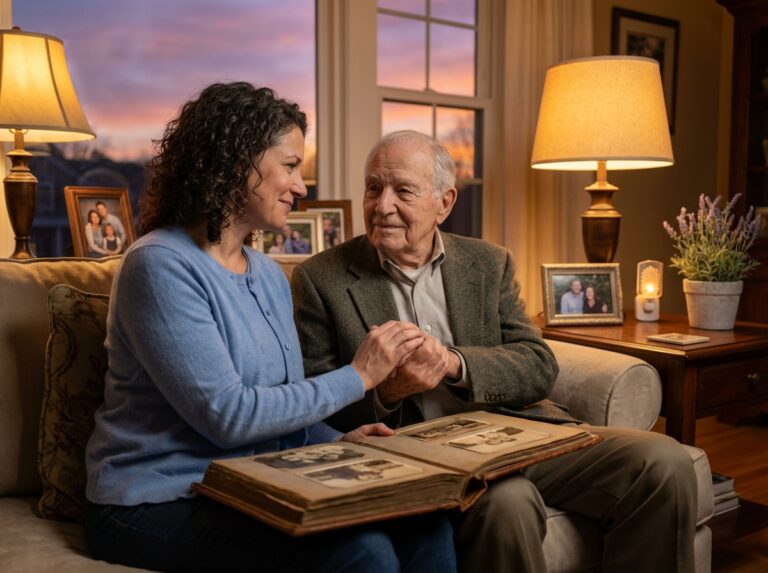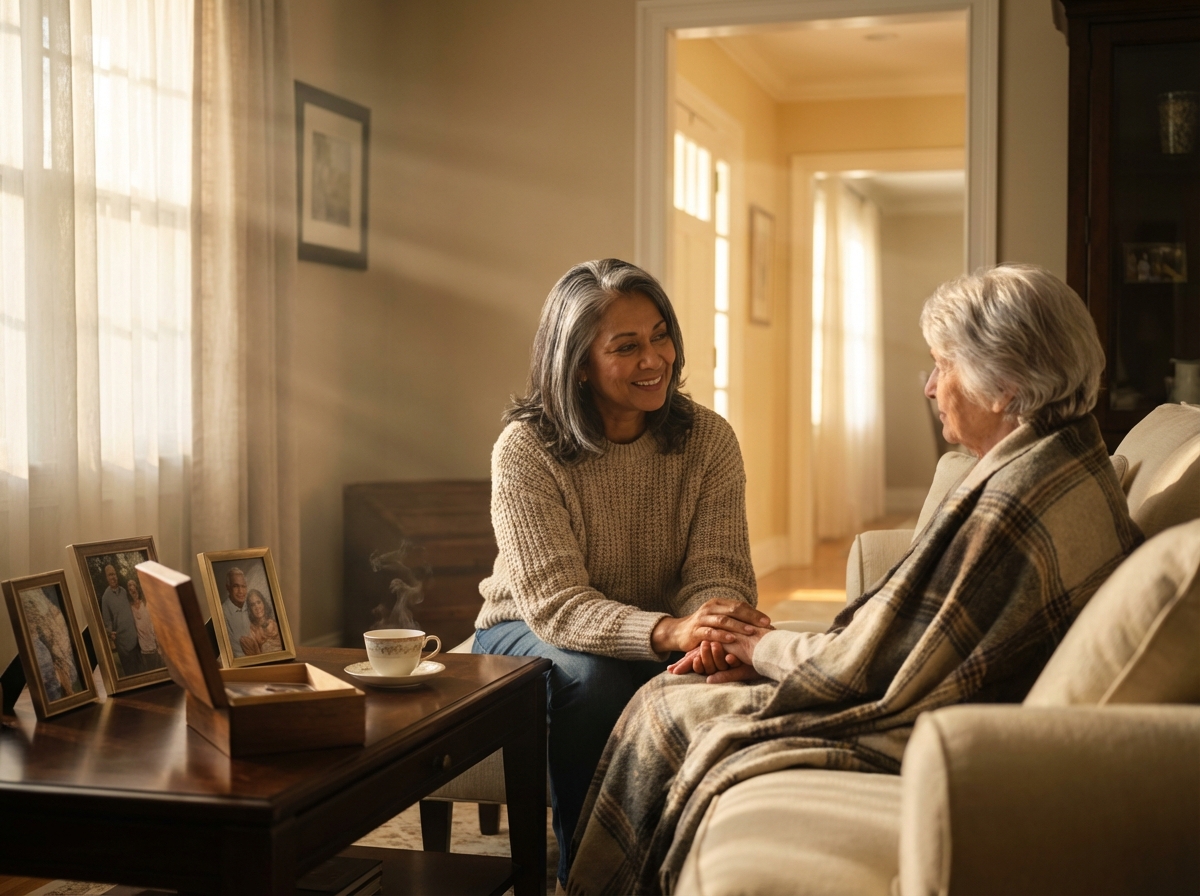
Many people with dementia repeatedly say they want to go home even when they already are. This article explains why that happens and gives family caregivers practical, person-centered communication strategies, sample phrases, environment and safety tips, and resources to reduce distress, preserve dignity, and keep loved ones safe in the familiar home setting.
Why they say they want to go home and what it means
When a person with dementia looks around their own living room and asks to go home, it feels like a punch to the gut for the family. You have spent years making this space comfortable. You might have even moved in to provide 24/7 support. Hearing those words can make you feel like you are failing. It is important to understand that this request is rarely about a physical building. In the world of cognitive decline, home is a feeling of safety and belonging that the person can no longer find in their current reality.
Recent data indicates that over 53 million Americans are now acting as family caregivers. Many of these caregivers report that communication breakdowns are the hardest part of their daily lives. In fact, 60 percent of caregivers say these struggles make their role significantly more challenging. You can find more about these statistics through the American Speech-Language-Hearing Association. Understanding why your loved one wants to leave is the first step toward reducing that stress.
The Cognitive Map is Fading
Memory loss is the most obvious reason for this behavior. Dementia does not just erase names or dates. It erases the internal map of the world. A person might look at their favorite armchair or the photos on the wall and see items that belong to a stranger. This is often called disorientation to place. Their brain can no longer connect the visual cues of the house to the concept of ownership.
Confabulation is another factor. This happens when the brain tries to fill in memory gaps with fabricated stories. They are not lying to you. Their brain is simply trying to make sense of a confusing world. They might believe they have a shift at a job they left thirty years ago. They might think their parents are waiting for them. When they say they want to go home, they might actually be saying they need to fulfill a responsibility from their past.
Emotional Drivers and the Search for Safety
The word home often serves as a metaphor for security. When a person feels anxious or scared, they naturally want to go to the place where they felt most protected. For many, this is a childhood home. It could also be a house they shared with a spouse who has passed away. They are not just looking for a roof and four walls. They are looking for the version of themselves that was healthy and in control.
Loneliness and grief play huge roles here. Even if you are standing right in front of them, they may feel a profound sense of loss. They are mourning their independence as well as their social roles. If they feel like a guest in your house rather than the master of their own, the urge to leave becomes overwhelming.
Sundowning and Physical Triggers
You might notice that these pleas happen more often in the late afternoon or early evening. This is known as sundowning. As the sun goes down, confusion often goes up. Fatigue makes it much harder for a damaged brain to process information. A person who was calm at breakfast might become desperate to leave by 5 PM.
Sensory issues can also trigger the desire to flee. Shadows on the floor might look like holes. The reflection in a window might look like an intruder. If the environment feels threatening, the only logical response is to get out. Routine habits can also be triggers. If they spent forty years leaving the house at a certain time to pick up kids or go to the store, their body might still feel that pull.
Assessing Urgency and Risk
It is vital to distinguish between a verbal request and a physical attempt to leave. Some people will sit and repeat the phrase for an hour without moving. Others will have their shoes on and their hand on the deadbolt before you can blink. You must assess the level of distress. Are they calm but persistent? Are they terrified and shaking?
If they are physically trying to leave, the risk of wandering or elopement is high. This is a safety emergency. If they are simply expressing a feeling, you have more time to use communication strategies. Keeping a log of these patterns is incredibly helpful. Note the time of day, what happened right before the request, and what finally calmed them down. You can use digital tools to track these behaviors. Information on using technology to manage caregiving shows how these logs help the whole family stay on the same page.
When to Call the Doctor
Sometimes the desire to go home is a symptom of a medical issue rather than just dementia progression. A sudden change in behavior is a red flag. Urinary tract infections are a common cause of increased confusion in older adults. Pain is another hidden driver. If a person has a toothache or a sore hip but cannot explain it, they might express that discomfort as a need to leave.
Check for signs of infection like fever or a change in the smell of urine. Look for physical signs of pain such as grimacing or guarding a certain part of the body. You should also review their medications with a clinician. Some drugs can cause delirium or increased agitation. If the behavior is new or suddenly much worse, contact a healthcare provider within 24 hours.
Behavioral Observation Checklist
Use this checklist to identify what might be happening when your loved one asks to go home.
| Observation Category | Specific Signs to Look For |
|---|---|
| Physical Safety | Are they wearing shoes or a coat? Are they pacing near the exit? |
| Emotional State | Do they look scared, angry, or just bored? Are they calling for a deceased relative? |
| Environmental Triggers | Is the room too loud? Are there dark shadows? Is the TV showing something upsetting? |
| Timing Patterns | Does this happen at the same time every day? Is it always right before a meal? |
| Medical Red Flags | Is there a sudden onset of confusion? Are they showing signs of physical pain? |
Short Examples of Behavior
The Task-Oriented Exit
Margaret starts looking for her purse every day at 4 PM. She insists she has to go home to make dinner for her children, even though her children are now in their fifties. Her trigger is the habit of a lifetime of caregiving.
The Fearful Plea
Robert becomes agitated when the sun sets. He looks at the hallway and says he does not recognize this place. He begs to go home because the shadows in the house make him feel like he is in a dangerous, unfamiliar building.
The Quiet Repetition
Alice sits in her favorite chair and asks when she can go home every ten minutes. She is not trying to move. She is simply expressing a sense of displacement and a need for the comfort of her past.
Taking a nonjudgmental approach is essential. They are not trying to be difficult. Their brain is giving them incorrect information. Resources like the Alzheimer’s Association provide excellent guidance on managing these behavioral symptoms without using force or arguments. Focus on being an observer first. When you understand the “why” behind the words, you can respond with the compassion they need.
Core communication principles to reduce distress
The moment a loved one insists on going home while sitting in their own living room, the natural instinct is to correct them. You might want to point at the furniture or show them the deed to the house. This factual approach rarely works because the request to go home is usually an emotional plea rather than a geographical one. Effective communication in these moments requires a shift from being a fact-checker to being an emotional anchor. Reducing communication breakdowns starts with the principle of validation.
Prioritize Validation Over Reality
Validation means accepting the person’s feelings as their current truth. When someone says they want to go home, they are often expressing a need for safety, comfort, or familiarity. Instead of saying they are already there, acknowledge the feeling behind the words. You might say that you understand they feel unsettled. This approach aligns with the C3PM-Dementia model presented by University of Florida researchers. This model emphasizes that emotional support is just as vital as medical care. By validating their distress, you lower their anxiety levels. This makes them more likely to engage with you in the next moment.
Use Simple Language and Short Sentences
Dementia affects how the brain processes complex information. Long explanations about why they cannot leave will only increase their confusion. Keep your sentences under ten words if possible. Use plain language. Avoid using “but” or “however” because these words signal a contradiction. Contradictions often lead to arguments. If you need to explain a delay, keep it brief. You could say that the weather is poor right now. You could mention that dinner is almost ready. Short sentences reduce the cognitive load on your loved one. This allows them to focus on your calm presence rather than struggling to decode your words.
Match Tone and Pace
Your non-verbal cues often speak louder than your words. If your loved one is agitated, your first goal is to remain the calmest person in the room. Speak slowly. Lower the pitch of your voice. If they are moving quickly, do not try to stop them abruptly. Instead, walk with them for a moment while speaking in a soothing rhythm. Matching their pace initially shows that you are on their side. Once you have their attention, you can gradually slow your own movements and speech. They will often subconsciously mirror your calmer state. This technique is a cornerstone of person-centered care because it respects their current physical and emotional reality.
Use Names and Memory Cues
Using the person’s preferred name helps grab their attention in a gentle way. It provides a sense of identity. In addition to using their name, incorporate physical memory cues. Point to a familiar photo of a grandchild. Hand them a favorite soft blanket. These objects act as anchors to the present environment. They provide sensory proof of comfort that words alone cannot offer. If they are looking for a childhood home, asking them to describe the kitchen in that house can be a powerful tool. This uses reminiscence to bridge the gap between their memory and the present moment.
Offer Choices Instead of Orders
Direct orders can feel infantilizing or threatening to someone with dementia. This often triggers resistance. Instead of saying they must sit down, offer a choice between two positive options. You might ask if they want to sit in the blue chair or on the sofa. You could ask if they prefer tea or apple juice. Choices provide a sense of control and autonomy. This is especially important when they feel like they have lost control over their surroundings. Keep the choices limited to two items to avoid overwhelming them.
The Ethics of Therapeutic Fibbing
Caregivers often struggle with the idea of “therapeutic fibbing” or “benevolent redirection.” You might feel dishonest if you do not tell the absolute truth. However, in dementia care, the goal is to minimize distress and maximize well-being. Telling a person that their parents are deceased or that their childhood home was sold decades ago can cause fresh grief. This grief is often forgotten minutes later, only to be relived when the topic arises again. Ethical care focuses on the person’s current emotional needs. If saying “We will go home after this cup of tea” brings peace, it is often the most compassionate choice. This is not about deception for the sake of the caregiver. It is about meeting the person in their reality to prevent unnecessary trauma.
| Communication Principle | The “Do” Approach | The “Don’t” Approach |
|---|---|---|
| Reality Orientation | Focus on feelings and comfort. | Argue about the address or the year. |
| Sentence Structure | Use five to eight words per sentence. | Give long, logical explanations. |
| Questioning | Ask “Yes” or “No” questions. | Ask open-ended “Why” questions. |
| Physical Interaction | Sit at eye level and use gentle touch. | Stand over them or use rapid gestures. |
| Redirection | Suggest a favorite snack or song. | Tell them they are being difficult. |
Adapting to Stages and Culture
Communication must evolve as the condition progresses. In the mild stage, you can use more logic and orientation cues. In the moderate stage, you must rely heavily on validation and redirection. By the advanced stage, your tone and physical touch become the primary forms of communication. Cultural background also plays a significant role in the U.S. context. Incorporating familiar faith practices, traditional foods, or primary languages can provide a deeper sense of “home” than any physical building. For many, home is a feeling of being understood within their own cultural traditions. Using familiar phrases from their heritage can act as a powerful calming agent when they feel lost in a confusing world.
The goal of communication is not to win an argument about where home is. The goal is to make the person feel safe enough to stop looking for it.
Limit Open-Ended Questions
Asking “Why do you want to go home?” requires a level of abstract thinking that may no longer be available to your loved one. It can lead to frustration and increased agitation. Instead, use closed questions that require a simple response. Ask if they are feeling tired. Ask if they are hungry. This helps you identify the underlying need without forcing them to perform a difficult cognitive task. If they cannot answer, observe their body language for clues. Often, the desire to go home is a signal for a physical need like pain or a full bladder. Addressing these needs can sometimes stop the repetitive requests entirely.
Ready-made phrases and scripts to use when they say they want to go home
Hearing the words I want to go home when your loved one is already sitting in their living room is one of the hardest moments for a family caregiver. It often signals a deep sense of displacement or an unmet emotional need rather than a literal desire for a different physical address. Having a set of prepared responses helps you stay calm when the person you care for becomes insistent or distressed.
Validation and calming phrases
The primary goal of validation is to make the person feel heard. You are not agreeing that they are in the wrong place. You are acknowledging their feelings of homesickness or anxiety. Use a soft and steady tone. Keep your body language relaxed.
I can see you feel worried. I am right here with you.
Use this when the person seems frightened or confused by their surroundings. It shifts the focus from the location to the relationship.
“I want to go home right now. This is not my house.”
“I can see you feel worried. I am right here with you. You are safe.”
“Where am I? I need to leave.”
“It is okay to feel unsure. I am right here with you. We will figure this out together.”
You miss your home. It sounds like a very special place.
This phrase works well for mild to moderate dementia. It allows the person to talk about their feelings without you having to correct their reality.
“I need to go back to my house on Maple Street.”
“You miss your home. It sounds like a very special place. Tell me what you loved most about that kitchen.”
“I don’t belong here. I want my own bed.”
“You miss your home. It was a special place for a long time. I understand why you want to be there.”
Gentle redirection scripts
Redirection moves the conversation toward a different topic or a future event. This is useful when the person is stuck on the idea of leaving immediately. Adopt a helpful and cooperative tone. Avoid saying no or arguing about the current location.
The car is not ready yet. Let’s have some tea while we wait.
This offers a logical reason for the delay. It works best for moderate dementia where a short term distraction is effective.
“Get my purse. I am leaving.”
“The car is not ready yet. Let’s have some tea while we wait for the mechanic to call.”
“I have to go home to cook dinner.”
“The car is not ready yet. Let’s have a snack here while we wait for the traffic to clear up.”
I need your help with this task before we head out.
Giving someone a sense of purpose can reduce the urge to leave. Use this when the person is physically restless.
“I’m going home now.”
“I need your help with these towels before we head out. Could you help me fold them?”
“I have to leave. My mother is waiting.”
“I need your help with this mail before we go. Can you help me open these envelopes?”
Reminiscence as an anchor
Reminiscence uses long term memories to provide comfort. This strategy is effective because long term memory often remains intact longer than short term memory. Use an inquisitive and warm tone.
Tell me about your childhood home. What color was the front door?
This anchors the person in a happy memory. It is very effective for those looking for a home from their past.
“I want to go home to my mom.”
“Tell me about your childhood home. What color was the front door? I remember you said it had a big porch.”
“I need to go back to the farm.”
“Tell me about the farm. Did you have a favorite animal there?”
Safety oriented responses for exit seeking
When a loved one is at the door and trying to leave, the situation becomes a safety risk. You must remain firm but kind. Do not use physical force. Use the C3PM-Dementia model approach by focusing on emotional support and relational rituals.
Let’s get your coat and we can walk together.
This preserves dignity. Often, a short walk down the hallway or to the porch and back is enough to satisfy the urge to move.
“I am walking out that door right now.”
“Let’s get your coat and we can walk together. It is a bit chilly, so we need to bundle up.”
“I’m leaving. You can’t stop me.”
“I want to go with you. Let’s get your coat and we can walk together to see the birds.”
Transitioning from words to activities
Once you have used a calming phrase, you must quickly transition to a meaningful activity. This prevents the person from cycling back to the original request. Use concrete objects to ground the person in the present moment.
- Offer a sensory experience. “I just put the kettle on. The tea smells like cinnamon. Let’s go see if it is ready.”
- Use visual cues. “I found this old photo album in the closet. Look at this picture of you at the beach.”
- Start a simple task. “I have these flowers that need water. Can you help me put them in this vase?”
- Play familiar music. “I hear your favorite song on the radio. Let’s go listen to it in the other room.”
| Scenario | Recommended Phrase | Dementia Stage |
|---|---|---|
| Looking for a deceased parent | “You are thinking about your mom. She loved you very much.” | Moderate to Advanced |
| Insisting they need to work | “The office is closed for the holiday. Let’s check the mail tomorrow.” | Mild to Moderate |
| Agitated exit seeking | “It is dark outside. Let’s stay here where it is warm and bright.” | All Stages |
| Confused by current house | “This is our safe place. I am staying here with you tonight.” | Moderate |
Using these scripts requires patience. You might have to repeat the same phrase several times. If one approach does not work, try another after a short pause. The goal is not to win an argument. The goal is to help your loved one feel secure in the space they are currently in.
Nonverbal, routine and environmental strategies to reinforce safety and comfort
Words are only one part of the solution when a loved one insists on leaving. Our bodies often speak louder than our voices in these moments. If you stand directly in front of someone who is agitated, it can feel like a confrontation. It is better to stand or sit at a slight angle. This side-by-side positioning feels like you are partners rather than opponents. Keep your hands visible and relaxed. Open-handed gestures suggest you have nothing to hide and are ready to help. Eye contact and facial expressions
Maintain soft eye contact without staring. A fixed stare can feel threatening to someone with cognitive decline. Try to keep your face calm even if you feel stressed. People with dementia often mirror the emotions of those around them. If you look panicked, they will feel more panic. If you remain steady, it signals that the environment is safe. A gentle touch on the shoulder or hand can be grounding if the person usually welcomes physical affection. Always watch for their reaction. If they pull away, give them space immediately.
The physical environment plays a massive role in why someone might feel they are in the wrong place. Shadows are a common trigger. As the sun goes down, shadows in corners or hallways can look like people or holes in the floor. This often fuels the urge to find a “safer” home. Lighting and noise control
Ensure your home has even, bright lighting during the day. Use soft, non-glare lights in the evening to eliminate dark spots. Reducing background noise is just as important. A television left on in another room can create a confusing hum. Someone with dementia might misinterpret these sounds as voices calling them from outside. Keep the environment quiet during the late afternoon hours when sundowning is most likely to occur. This reduces the sensory overload that leads to the “I want to go home” plea.
Memory cues and visual anchors
You can use the environment to remind your loved one that they are already in a place of comfort. Place large, framed photos of the current house or the family in prominent spots. Use labels with large print and high contrast on doors. A sign that says “The Kitchen” or “Mary’s Bedroom” helps with orientation. Memory boxes are another effective tool. These are small containers filled with meaningful objects like old keys, fabric swatches, or hobby items. Placing a memory box near their favorite chair can provide a sensory anchor. When they start to feel displaced, these objects offer a tangible connection to their identity and their current surroundings. Communication breakdowns are a major hurdle for caregivers, but these visual cues do some of the heavy lifting for you.
Safety becomes a primary concern when the desire to go home turns into an attempt to leave the house. You must balance their freedom with the need for security. Managing exits and doors
There are several low-cost ways to make exits less tempting. You can paint the front door the same color as the walls so it blends in. Some families place a dark-colored rug in front of the door. To someone with advanced dementia, a black rug can look like a deep hole, which naturally discourages them from stepping over it. You can also install simple door alarms that chime when the door opens. These cost between $25 and $150 and provide peace of mind without making the home feel like a prison. If the person is determined to leave, consider using “camouflaged” locks like slide bolts placed very high or very low out of the direct line of sight.
Nighttime safety and routines
The urge to leave often peaks at night. This is frequently linked to a need to use the bathroom or a general sense of disorientation upon waking in the dark. Use motion-sensor night lights in the bedroom and hallway. These guide the person safely and reduce the fear that comes with waking up in a pitch-black room. A consistent bedtime routine is essential. Try to keep the same schedule for meals, bathing, and sleep every single day. Predictability reduces the anxiety that triggers the “go home” response. If they wake up and insist on leaving, use the short, calming scripts mentioned in the previous chapter while offering a small glass of water or a warm blanket.
Sometimes the best way to handle the urge to leave is to allow a supervised outing. Planning safe excursions
If your loved one is adamant about going somewhere, a short walk or a drive can satisfy the need for movement. Keep these outings brief, usually between 30 and 60 minutes. Always have a “safe exit kit” ready. This should include a recent photo of the person, a list of their medications, and an identification bracelet. Many local police departments have registries for vulnerable adults. Registering your loved one can ensure a faster and safer return if they ever manage to leave the house unsupervised. These supervised trips can act as a pressure valve, releasing the built-up tension of feeling “trapped” inside.
Professional help and home adaptations
You do not have to figure all of this out alone. Occupational therapists (OTs) are experts at modifying homes for dementia safety. They can suggest specific layouts that reduce confusion and increase mobility. An OT home assessment usually costs between $150 and $300. This is a worthwhile investment considering that caregiving statistics show families spend an average of $7,200 annually on out-of-pocket costs. Spending a small amount on professional advice can prevent expensive emergencies or the need for early facility placement. You should involve a professional if your loved one is successfully bypassing locks or if they have fallen while trying to exit the home.
| Intervention | Estimated Cost | Primary Benefit |
|---|---|---|
| Door Alarms | $25 – $150 | Alerts you to exit attempts immediately |
| Motion Night Lights | $10 – $30 | Reduces nighttime falls and confusion |
| OT Home Assessment | $150 – $300 | Professional safety and layout advice |
| Visual Cues (Labels/Photos) | Under $50 | Helps with orientation and comfort |
Meaningful objects can also serve as a bridge to the present. If they are looking for a home from thirty years ago, hand them a quilt or a book they love today. This shift from a mental “place” to a physical “feeling” is powerful. It moves the focus from a destination they cannot reach to a comfort they can experience right now. Combining these environmental changes with the nonverbal cues of a calm presence creates a sanctuary. It makes the current house feel less like a building and more like the home they are searching for.
Navigating legal, medical, and family challenges
Many caregivers feel a sense of guilt when they cannot provide the answers their loved ones want. This is especially true when a parent or spouse insists on going home while they are sitting in their own living room. These moments are exhausting and require quick thinking. This section provides direct answers to the most common concerns regarding safety, legality, and family dynamics in these situations.
How do I handle other family members who disagree with my care strategies?
Conflict often arises when family members have different levels of daily involvement. Some may feel that therapeutic lying is wrong. Others might think you are being too restrictive with locks. Share your behavior logs with them. Show them the data on what triggers the agitation. Consistency is essential for the person with dementia. If everyone uses different scripts, the confusion will increase. Consider a family meeting with a geriatrician to establish a unified approach. This takes the pressure off you as the primary decision maker. Recent data shows that communication breakdowns are a major hurdle for caregivers, so a shared plan is vital.
When is the right time to call 911 or seek emergency help?
Call 911 if there is an immediate threat to safety. This includes if the person has wandered away and you cannot find them within a few minutes. You should call if they become physically violent and you are in danger. If you notice a sudden change in their medical status like a high fever or extreme lethargy, seek help. When you call, state clearly that the person has dementia. This helps responders use the correct de escalation techniques. Do not wait if you feel the situation is out of your control. Your safety is just as important as theirs.
What is the best way to document these behaviors for a doctor?
Keep a dedicated notebook or use a digital log. Record the date and the exact time the behavior started. Note what was happening in the room before the request. Write down the specific phrases they used. Include what you did to try and calm them. Note if the intervention worked or if it made things worse. This information is vital for your doctor. It can help them determine if the behavior is a side effect of a medication or a sign of a new medical issue like a urinary tract infection. Accurate logs lead to better treatment plans.
What legal and ethical steps should I take to protect my loved one?
Ensure that you have a Durable Power of Attorney and an Advance Directive in place. These documents allow you to make decisions about their health and safety when they can no longer do so. Keep copies of these papers in an accessible place. It is also helpful to have a signed HIPAA release so you can talk freely with their medical team. Ethically, always aim for the least restrictive environment possible while still ensuring their safety. Documenting your reasons for certain decisions can help if legal questions ever arise. These steps provide a framework for difficult choices.
Where can I turn for more help when I feel like I cannot do this alone?
You are not alone in this journey. The Alzheimer’s Association has a 24/7 helpline at 800.272.3900. They can provide immediate advice during a crisis. You can also look into community respite programs. These allow you to take a break while your loved one is in a safe environment. For more information on national support systems, visit the National Strategy to Support Family Caregivers website. Seeking help is a sign of strength. It ensures that you can continue to provide the best care possible for your loved one while maintaining your own health.
References
- Communication Breakdowns Are a Major Hurdle for Caregivers — A majority of caregivers of children and adults with communication difficulties (60%) say that communication breakdowns make their role more challenging.
- UF researchers present communication skills model to support … — UF researchers present communication skills model to support family caregivers in Alzheimer's caregiving.
- Caregiving Statistics US: Insights for Family Caregivers — These caregiving statistics provide a data-driven view into the demographics, responsibilities, challenges, and needs of caregivers.
- Using Technology To Manage and Simplify Family Caregiving — Family caregiving is increasingly managed through digital coordination, especially for long-distance families.
- Public Health's Roles in Supporting Informal and Family Caregiving — Public Health's Roles in Supporting Informal and Family Caregivers notes that 41.8 million people served as a caregiver to an adult over the age …
- Support for Family Caregiving Gains Momentum — With family caregiving on the rise, there is growing recognition among voters, policymakers, and employers about the significant challenges posed by caregiving.
- Caregiving in the US – AARP — Over 53 million Americans are caregivers. Explore key findings on demographics, financial strain, workplace impact, and policy needs in …
- National Alliance for Caregiving: Caregiving in the US Report — Nearly 1 in 4 Americans is a family caregiver—a staggering increase from 2015 · Most care recipients are older adults; nearly half are 75+ …
- National Strategy to Support Family Caregivers – ACL.gov — The National Strategy to Support Family Caregivers was created to support family caregivers of all ages, from youth to grandparents, and regardless of where …
Legal Disclaimers & Brand Notices
The content provided in this article is for informational purposes only and does not constitute professional medical advice, diagnosis, or treatment. Always seek the advice of your physician or another qualified healthcare provider with any questions you may have regarding a medical condition, especially concerning dementia progression, urinary tract infections, or medication management. Never disregard professional medical advice or delay in seeking it because of something you have read in this article.
All product names, logos, and brands mentioned or linked within this text are the property of their respective owners. All company, product, and service names used are for identification purposes only and do not imply endorsement or affiliation.