De-escalating Aggression & Difficult Behaviors

Handling Accusations of Stealing: Scripts for Paranoia

Caregiver calmly listening to elderly person at a kitchen table with keys visible, warm natural light, memory aids in background

Accusations of stealing are a common, distressing symptom for people living with dementia and their families. This article explores why these suspicions arise, how to respond in the moment with compassion and clarity, and long‑term measures to reduce recurrence. Caregivers…

What to Do When They Don’t Recognize You: Coping and Responding

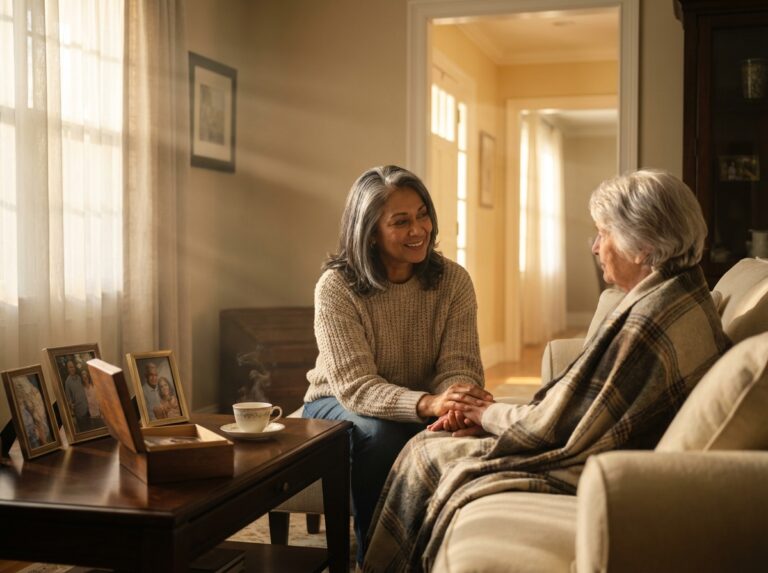
Caregiver gently holding hands and speaking with an older adult with dementia at home, warm natural light, compassionate connection.

When a loved one with dementia no longer recognizes you, caregiving becomes emotionally and practically challenging. This article explores communication strategies, compassionate phrases, and real conversation examples for family caregivers supporting people with dementia or Alzheimer’s at home in the…

Sundowning Strategies: Conversation Starters for Evening Agitation

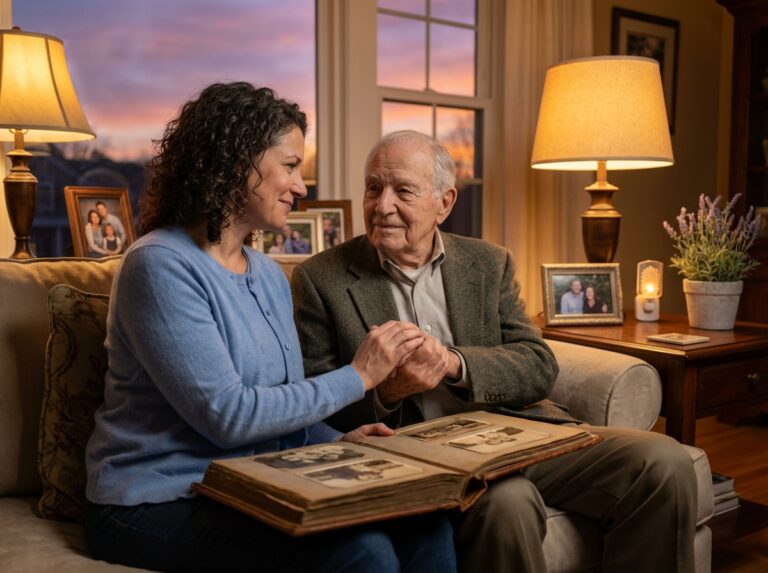
Caregiver gently holding an elderly person’s hand in a softly lit living room at dusk with a photo album nearby, conveying calm evening dementia care

Sundowning — increased confusion, anxiety or agitation at dusk — is common in dementia and can be the hardest part of home care. This article explores why twilight agitation happens, how to adjust routines and environments, and which communication techniques…

What to Say When They Want to Go Home (And They Are Home)

Caregiver holding hands with an older adult with dementia in a warm, tidy living room showing comforting photos and a memory box

Many people with dementia repeatedly say they want to go home even when they already are. This article explains why that happens and gives family caregivers practical, person-centered communication strategies, sample phrases, environment and safety tips, and resources to reduce…