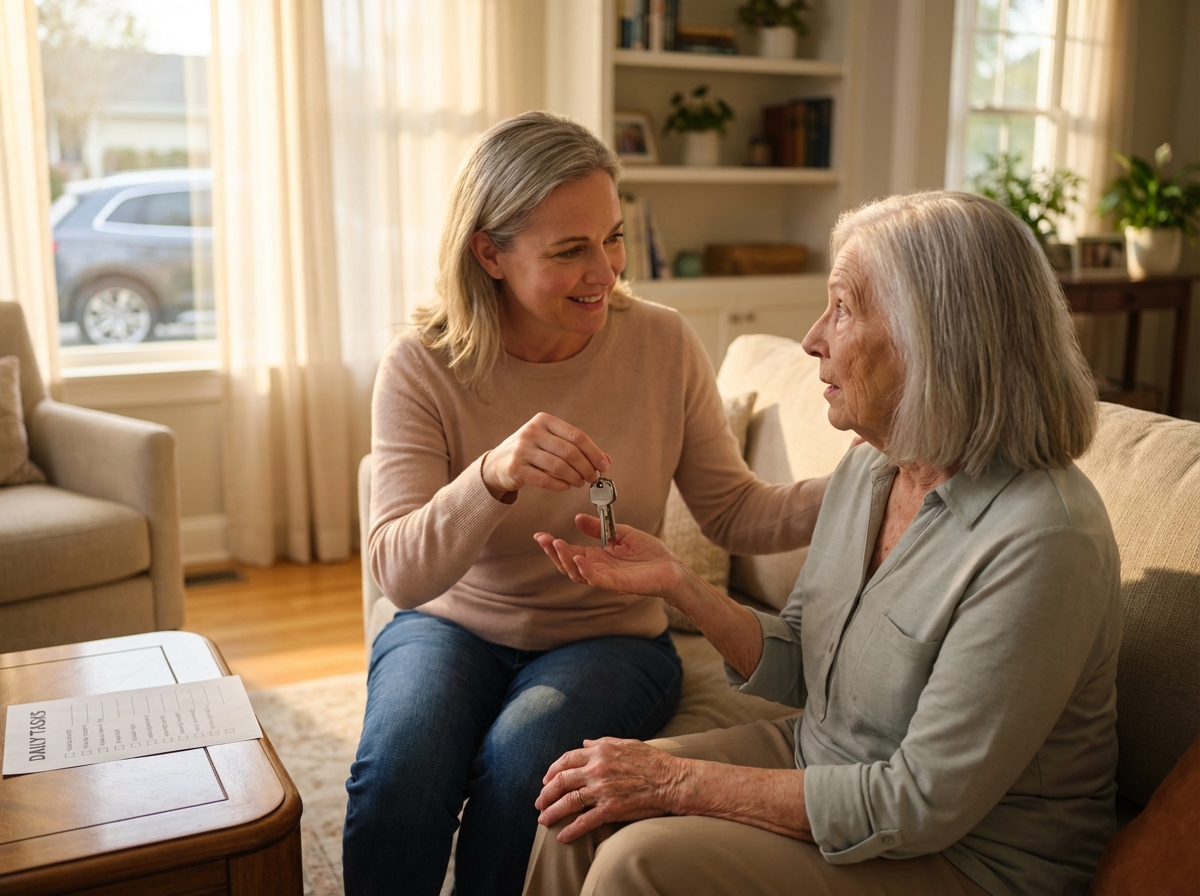
Taking away a loved one’s car keys can feel like betrayal, but for family caregivers, it is often necessary to prevent harm. This article offers compassionate communication strategies, a practical script, role‑play examples, and follow‑up steps for transitioning away from driving. Use evidence-based approaches, legal considerations, and safety planning to protect loved ones while preserving dignity and family relationships.
Understanding why driving becomes unsafe
Driving is one of the most complex tasks the human brain performs every day. It requires a perfect harmony between physical movement and mental processing. When dementia enters the picture, this harmony begins to break down. The changes are often slow at first. You might not notice them on a quick trip to the corner store. But as the disease progresses, the cognitive skills needed to stay safe on the road inevitably decline. Understanding these specific changes helps you see why a loved one can no longer manage a vehicle safely.
Dementia driving safety and cognitive decline
The brain uses several key functions to drive. Attention is the most critical. A driver must focus on the road while simultaneously monitoring mirrors, pedestrians, and traffic signals. Dementia makes it hard to switch focus between these different stimuli. If a driver gets distracted by a billboard or a passenger, they might not notice the car in front of them has stopped. Visuospatial skills also suffer. This means the brain struggles to judge the distance between objects. A person might think they have enough room to make a left turn when they actually do not. Judgment and reaction time are the next to go. Processing a sudden change, like a child running into the street, takes much longer for a brain with cognitive impairment. By the time the foot moves to the brake, it might be too late. Recent data shows that many people with dementia stop driving shortly after symptoms appear, but others continue long after it is safe.
Recognizing Alzheimer’s driving signs early
You should look for specific red flags during daily trips. Close calls are the most obvious warning. If you notice your loved one frequently slamming on the brakes or getting honked at by other drivers, their situational awareness is failing. Getting lost in familiar places is another major indicator. A person might drive to the same pharmacy they have used for twenty years and suddenly forget which turn to take. Look for physical evidence on the car as well. New dents, scrapes on the bumper, or a clipped side mirror suggest they are struggling with the dimensions of the vehicle. Confusion with the pedals is a high risk factor. Pressing the gas instead of the brake is a common error when the brain can no longer map motor functions correctly. Even if an accident has not happened yet, these behaviors show that the risk is climbing. Reports indicate that a majority of older adults with cognitive issues are still behind the wheel, which puts everyone on the road in danger.
Compounding risk factors and health conditions
Dementia does not exist in a vacuum. Other age-related issues make driving even more difficult. Vision loss from cataracts or macular degeneration reduces the ability to see clearly in low light. Many medications used to treat dementia symptoms or related anxiety cause significant drowsiness. This further slows down an already delayed reaction time. Sleep disorders like apnea lead to daytime fatigue, which impairs focus. When you combine these physical limitations with cognitive decline, the chance of a crash increases. Research from JAMA Network highlights that medical conditions are a primary cause in a significant percentage of car accidents among older adults. You must consider the total health picture when evaluating safety.
How to track and document driving concerns
Objective evidence is your best tool when the time comes to talk. Do not rely on memory or feelings. Start a detailed log of every driving incident you witness or hear about. This documentation should be specific and factual.
Incident Log Essentials
Include the date and the exact time of the event. Record the location and the weather conditions. Describe the behavior clearly, such as drifting over the center line, missing a red light, or driving significantly under the speed limit. Note the mileage on the car to see how often they are driving. If a neighbor or a friend mentions a concern, write down their statement as well. This log provides a clear pattern of decline that is hard to argue against. It also helps medical professionals make a more accurate assessment of the situation.
Consulting professionals and when to stop driving
You do not have to carry the burden of this decision alone. Reach out to a primary care physician or a neurologist. They can perform clinical tests that measure cognitive speed and executive function. You can also request an evaluation from a certified driving rehabilitation specialist (CDRS). These experts use specialized equipment to test physical and mental driving skills in a controlled environment. Their report carries a lot of weight because it is an unbiased professional opinion. Finally, check your local DMV policies. Some states have specific reporting laws that require doctors to notify the state if a patient is no longer fit to drive. Knowing the legal requirements in your area helps you navigate the process with more confidence. Taking these steps ensures that the decision is based on safety and medical facts rather than family conflict.
Preparing for the conversation
Success in this transition depends on the work you do before you ever sit down to talk. You cannot walk into this conversation without a solid foundation. It is a process of building a driving retirement plan that prioritizes safety while respecting the person. You need to move from a place of emotional reaction to one of strategic preparation. This means organizing your thoughts, your team, and your data long before the keys are mentioned.
Choosing the right setting
The environment dictates the mood. You should avoid busy restaurants or crowded family gatherings. These places offer too many distractions. They can make a person feel cornered or embarrassed. It is better to choose a quiet, neutral location where everyone can sit comfortably. Home is often best, but only if it feels like a safe space rather than a courtroom. You should pick a time of day when your loved one is most alert. For many people with dementia, mornings are better because the confusion of sundowning has not set in yet. You want them to have the best possible chance to process what you are saying.
Assembling your support team
You should not do this alone. A small, unified team is more effective than a single voice. This team might include a trusted family member who has a calm relationship with the driver. You should also involve professionals. A primary care physician or a neurologist can provide the medical authority that family members often lack. Sometimes a person will listen to a doctor when they will not listen to their own child. An occupational therapist who specializes in driving assessments is another vital resource. They provide an objective third-party perspective. If there are complex assets involved, a legal advisor can help explain the risks to the estate if an accident occurs. You must decide who will lead the talk. Usually, the person with the strongest emotional bond should speak first. If the relationship is strained, a professional should take the lead to keep the peace.
Gathering objective evidence
Arguments about driving often fail because they feel like opinions. You need facts. Use the incident log you have been keeping. This should include dates, specific errors, and any close calls. If there are medical notes regarding vision loss or slowed reaction times, have them ready. Results from a formal driving assessment are the strongest evidence you can have. Research shows that a majority of older adults with cognitive impairment still drive, which highlights why objective data is so necessary to break through denial. You are not saying they are a bad person. You are showing that the condition has changed their abilities. This shifts the blame from the person to the disease.
Navigating legal and practical issues
You must understand the rules in your area before you act. Check your local DMV rules regarding reporting unsafe drivers. Some states allow anonymous reporting, while others require a physician to sign off. You should also look at insurance implications. If a driver has a formal diagnosis and continues to drive against medical advice, the insurance company might deny coverage after an accident. This is a massive financial risk. Review the Power of Attorney documents to see what authority you have regarding health and safety decisions.
It is important to note that you generally cannot legally seize property that does not belong to you. If the car is in their name, they have a right to the keys. However, you have a moral and safety obligation to intervene. If you have Power of Attorney, check the specific language regarding property management. In some cases, a temporary suspension of driving is a good middle ground while you wait for further medical evaluations. This allows everyone to adjust to the idea of a driving retirement plan without the shock of a permanent ban.
Planning immediate alternatives
You cannot take keys from an elderly driver without giving them a way to get around. Losing a car feels like losing a limb. You must have a transportation menu ready. This might include rideshare apps with simplified interfaces or family members who commit to specific “shift” times for errands. Look into community transit options or specialized mobility services for seniors. Some areas have volunteer driver programs specifically for medical appointments. Having these options written down shows that their life is not ending. It is just changing. It proves that you have thought about their needs and their independence.
Preparation Checklist
| Task | Status |
|---|---|
| Select a quiet, neutral location and a morning time slot. | Pending |
| Identify the lead speaker and the supporting professional. | Pending |
| Print the incident log and medical assessment notes. | Pending |
| Verify local DMV reporting laws and insurance policies. | Pending |
| Create a weekly schedule of alternative transportation options. | Pending |
Self-care and debriefing
This conversation will be draining. You must plan for your own recovery. Arrange for a friend to call you afterward or schedule a session with a counselor. You need a space to process the guilt or anger that might surface. After the meeting, debrief with your support team. Discuss what worked and what caused friction. This is rarely a one-time talk. It is often a series of discussions. Understanding the long-term outlook is helpful. Experts suggest that drivers with dementia: forecasting the future involves recognizing that the transition away from the wheel is inevitable. Preparing yourself emotionally ensures you can stay calm when the person you care for becomes upset. Your calm intention is the anchor for the entire process.
Communication techniques that protect dignity
Effective communication strategies for dementia start with a shift in your perspective. You are not just delivering news. You are managing a delicate emotional state. When you prepare to discuss the car keys, your goal is to keep your loved one safe while preserving their sense of self. This requires a specific set of tools that prioritize connection over facts. Validation therapy is one of the most important methods you can use. It involves accepting the reality of the person with dementia. If they insist they are a perfect driver, do not correct them with a list of their recent accidents. Arguing triggers a defensive response. It shuts down the conversation. Instead, acknowledge the pride they feel in their driving history. This builds a bridge of trust. It makes the transition easier when you eventually discuss how to talk to someone with Alzheimer’s about driving.
Nonverbal strategies for a calm environment
Your body language often speaks louder than your words. People with cognitive decline are highly sensitive to physical cues. Sit at the same eye level as your loved one. Standing over them can feel threatening. Maintain soft eye contact to show you are present. Avoid staring intensely. Keep your posture open. Do not cross your arms. This signals that you are an ally. Your tone of voice should remain low and steady. If you become high-pitched or loud, they will mirror your anxiety. A calm presence can de-escalate a tense moment before it turns into a confrontation. Common driving behaviors in older adults with dementia often include drifting out of lanes or getting traffic tickets. When you see these signs, your physical calmness helps you address them without causing a panic.
Language and pacing
Use simple language. Short sentences are easier for the brain to process. Stick to one idea at a time. Instead of giving a long explanation about safety and insurance and health, focus on one clear point. Use positive phrasing. Say “let us try the new car service.” Avoid saying “you are not allowed to drive anymore.” Pacing is equally vital. Give your loved one at least twenty seconds to process what you said. Do not rush to fill the silence. If you need to repeat a point, use the exact same words. Changing the wording requires the brain to start the processing cycle all over again. This patience prevents the frustration that leads to outbursts.
Choice-based language and controlled options
Giving up the keys feels like a total loss of control. You can counter this by using choice-based language. Offer two options that both lead to a safe outcome. Ask if they would like to go to the grocery store on Tuesday morning or Wednesday afternoon. Ask if they prefer your daughter to drive them or if they want to use a car service. These small choices provide a sense of agency. They feel like they are still in the driver seat of their life. Research shows a majority of older adults with cognitive impairment still drive. This makes the use of controlled options a necessary daily strategy for safety.
Reminiscence to lower anxiety
When the conversation about driving becomes too heavy, use reminiscence. Shift the focus to happy memories of past trips. Ask about their first car. Talk about the long drives they took years ago. This lowers cortisol levels. It reminds them that you value their life story. Once the anxiety levels drop, you can gently steer the conversation back to current safety needs. This technique turns a potential battle into a shared moment of reflection.
| Emotional State | Caregiver Body Language | Caregiver Response |
|---|---|---|
| Anxious | Slow movements. Gentle touch on the arm. | I am right here with you. We will figure this out together. |
| Angry | Give physical space. Neutral expression. | I can see you are upset. Let us take a break for a minute. |
| In Denial | Nodding. Relaxed shoulders. | You have always been so independent. I understand why this is hard. |
Micro scripts for de-escalation
Having a few phrases ready can save a difficult moment. If they become defensive, try saying “I hear how frustrated you are.” If they demand their keys, try saying “I want to make sure we keep your perfect driving record safe.” If the conversation circles, use a redirection script. Say “that is a good point. Let us have some lunch and talk more later.” These scripts prevent you from falling into the trap of logic. Logic does not work when the brain is struggling with dementia. Empathy is your best tool. Forecasting the future of drivers with dementia is a growing concern for many families. Using these communication strategies for dementia helps you navigate that future with grace.
Communication Dos
Use the person’s name to get their attention.
Smile gently even if you feel stressed.
Use visual cues like pointing to a calendar.
Validate the emotion behind the words.
Communication Don’ts
Do not use “why” questions. They are too complex.
Do not treat them like a child.
Do not talk about them as if they are not in the room.
Do not use “no” or “stop” as your first response.
A step-by-step script to take the keys
The conversation about car keys is often the most painful moment in dementia care. It represents a loss of independence that many seniors fear more than the disease itself. Approaching this with a plan helps preserve the relationship while ensuring everyone stays safe on the road.
Opening the conversation
Opening with concern
Start the talk when things are calm. Sit down together and use a soft tone. You might say, “I have been thinking about your safety lately because I care about you so much. I want to make sure you stay independent and safe for a long time.” This opening reduces the feeling of an attack. It frames the issue as an act of love rather than a punishment.
The safety rationale
Transition to the facts without being accusatory. Research shows that common driving behaviors in older adults with dementia include drifting out of lanes and getting traffic tickets. You can mention specific things you have seen. “I noticed that the new dent on the bumper and the way you missed that stop sign yesterday worried me. My priority is keeping you and others in the neighborhood out of harm’s way.”
The request and removal
Be direct about the need to stop. “I need you to stop driving for now. I am going to hold onto the keys to keep them safe.” If they refuse to hand them over, you can suggest a temporary plan. “Let’s try a one-month break from driving to see how we can manage with other rides.” If the situation is urgent, you may need to place the keys out of reach or move the car to a different location before the talk starts.
Offering immediate alternatives
Always offer a solution right away. “We can use rideshare apps or I can drive you to your appointments. I will make sure you get to the grocery store every Tuesday morning just like always.” This shows that their life will not stop just because the driving does. A trial period can help them adjust to being a passenger without feeling like the change is permanent.
Handling common reactions
| Reaction | Caregiver Phrase | Next Step |
|---|---|---|
| Angry Refusal | I hear how upset you are. I am doing this because I love you. | Pause the talk. Keep the keys. |
| Minimization | Even small mistakes can lead to big accidents now. | Show documentation of dents. |
| Bargaining | I know you only go nearby, but the risks are still too high. | Offer to run the errand together. |
| Tears | I know this is hard. I am here to help you through it. | Offer a hug. Sit in silence. |
| Acceptance | Thank you for trusting me. Let’s look at the bus schedule. | Set up the first alternative ride. |
Role play dialogues
Scenario 1. Angry Refusal
Caregiver: Dad, I need to take the car keys for your safety.
Parent: You have no right to do this. It is my car.
Caregiver: I understand you are angry. I am doing this because I want you to be safe.
Parent: I am not giving them to you.
Caregiver: We can take a break from this talk, but the car will stay parked today.
Scenario 2. Bargaining
Caregiver: We need to find other ways for you to get around.
Parent: I will only drive during the day.
Caregiver: Even daytime driving is becoming difficult. Let’s use my car instead.
Parent: Just to the pharmacy and back?
Caregiver: I will pick up your prescriptions this afternoon so you do not have to worry about it.
Scenario 3. Minimization
Caregiver: I am worried about the new scratches on the car.
Parent: Those were there before. It is no big deal.
Caregiver: They show that your reflexes are changing. We need to stop driving to prevent a bigger accident.
Parent: Everyone has a little bump sometimes.
Caregiver: According to driving impairment studies among older adults, these small signs matter. I need you to listen to me on this.
Practical next steps after the conversation
Immediate safety measures after the talk
The moments following the conversation are the most critical for physical safety. You should remove all sets of keys from the usual spots. This includes the spare key hidden in the kitchen drawer or the one kept under a flowerpot outside. If the person with dementia sees the keys, the urge to drive might return. You can park the car around the block or at a neighbor’s house to keep it out of sight. Some families choose to change the garage door code. You might also consider disconnecting the car battery if you cannot move the vehicle. These steps prevent a sudden impulsive decision to get behind the wheel. You should offer to drive them to every appointment for the next few days. This shows them that their life will not stop just because they are not driving. You can set up a rideshare account on their phone if they still know how to use it. This provides a sense of control. Many families find that dementia mobility solutions work best when they are introduced slowly. You should act as a temporary escort to all social events to ease the transition.
Handling emergencies and aggression
If the person becomes aggressive or drives away in anger, do not chase the vehicle in your own car. This increases the risk of a high-speed accident. If they leave while agitated, they are more likely to make mistakes. Wait five minutes to see if they return. If they do not, call the non-emergency police line. Provide the car make, model, and license plate number. To prevent this scenario, consider installing a GPS tracker on the vehicle so you can locate them without a chase. If the person becomes violent or threatens self-harm during the discussion, call 911 immediately. Keep a recent photo of the person and the car details near your phone for these crisis situations.
Medium-term planning and professional evaluations
You do not have to carry the burden of this decision alone. You should schedule a formal driving assessment with an occupational therapist. These experts perform fitness-to-drive evaluations that focus on reaction times. They look at physical ability. They assess cognitive processing speed. A professional report often carries more weight than a family member’s opinion. You should also request a full medical review from their primary doctor. Some medications cause dizziness. Others cause blurred vision. A medication review can sometimes identify reversible issues that affect driving. If the impairment is permanent, the doctor can issue a medical advisory. This document is useful if you need to explain the situation to other family members. It also serves as a record for the DMV if a formal report becomes necessary. You might look into mobility rehab programs. These programs help seniors maintain their physical strength. This helps them stay mobile even without a car.
Long-term transitions and community resources
Moving away from driving is a process that takes time. Some people start by downsizing to daytime driving only. This is a temporary fix for those in the very early stages of memory loss. Eventually, you will need to find permanent alternatives to driving for seniors. You should contact your local office on aging to ask about volunteer driver programs. These programs often use neighbors to help seniors with errands. Many towns offer community transit options like small buses or vans. These services are often door-to-door. You should connect with social services to see if there are grants for transportation. You can also look into grocery delivery services. This removes the need for weekly trips to the store. You might suggest they join a senior center that provides its own transportation. This keeps them socially active. It prevents the isolation that often follows the loss of a driver’s license.
Legal steps and documentation
You must understand the legal requirements in your state. Some states have mandatory driver reporting laws for doctors. You should check if you are required to notify the DMV about the diagnosis. This is also the time to review your Power of Attorney documents. You need to ensure you have the legal authority to make safety decisions. You should discuss advance care planning with a legal professional. This ensures that the person’s wishes are respected as the disease progresses. You might need to file a formal report with the state licensing agency if the person refuses to stop driving. This is a hard step. It is often necessary to prevent a tragedy. Research shows that driving impairment among older adults is a major factor in road accidents. Taking legal action protects your loved one. It also protects the community.
Preserving autonomy and dignity
Losing a license feels like losing independence. You should find ways to give them back some control. You can schedule regular errands so they know when they will be leaving the house. You might look into driving simulators if they miss the feeling of being behind the wheel. Some people find comfort in volunteer programs where they can still help others. You should focus on what they can still do. You can ask them to navigate while you drive. You can let them choose the music or the route. These small gestures help maintain their dignity. You should avoid talking down to them about the situation. You should treat the car as a tool that is no longer safe. Do not treat it as a punishment.
Template for a letter to family members
Dear Family,

We have made the difficult decision that [Name] will no longer be driving.
This follows a medical review and several safety concerns.
Our goal is to keep [Name] and the community safe.
We have a plan for transportation.
We ask that you do not offer to let [Name] drive your vehicles.
Please support us in keeping the keys put away.
We want to focus on making sure [Name] stays active and social.
Thank you for your understanding.
Checklist for practical needs
| Category | Action Item | Frequency |
|---|---|---|
| Transport | Schedule rideshare or volunteer driver | Weekly |
| Groceries | Set up online delivery or store trips | Weekly |
| Medical | Arrange escort for all appointments | As needed |
| Social | Book senior center van or family rides | Twice weekly |
| Legal | Update Power of Attorney and DMV records | Once |
Final takeaways and how to move forward
The conversation about stopping driving is rarely a single event. It is a process that requires patience, a solid plan, and a lot of heart. You have looked at the scripts. You have studied the strategies. Now it is time to put those pieces together. Success in this transition depends on your preparation. Empathy is your strongest tool. You are not taking away their freedom. You are protecting their life. You are also protecting the lives of others on the road.
The core principles we discussed remain the foundation of this transition. Use clear language. Avoid vague hints that the person might misunderstand. A tested script helps you stay on track when emotions run high. Documentation of recent driving errors provides a factual basis for the discussion. This keeps the focus on safety rather than personal opinions. Medical consultation is another vital tool. A doctor can explain how the disease affects reaction times. This often removes the burden of being the “bad guy” from the family. Legal awareness is also necessary. Some states have specific reporting requirements for cognitive impairment. You must know the rules in your area to stay compliant.
Finding alternatives to driving is the only way to maintain a sense of independence. Look for local transport services. Set up a schedule with family members. This ensures the person still gets to the grocery store. They still get to the park. Life does not end when the car keys are put away. It just changes shape. Research shows that dementia caregiver resources are essential for managing these transitions without losing your mind.
This process is exhausting. You might feel guilt. You might face anger from your loved one. Take care of your own mental health. Reach out to support groups. Talk to friends who understand the situation. You cannot provide good care if you are burnt out. Remember that your loved one is reacting to the loss of a major life skill. Their anger is often a mask for fear. Stay calm. Stay firm. Stay kind.
Immediate action plan
Step one. Document recent incidents.
Write down specific moments where safety was at risk. Note if they missed a red light. Note if they struggled with a familiar turn. This creates a factual record for the doctor. It helps you stay objective during the conversation.
Step two. Schedule a medical appointment.
Call the primary care physician today. Tell the office you need to discuss cognitive changes. Mention driving safety specifically. This starts the formal evaluation process. It brings a professional voice into the decision.
Step three. Draft your script.
Put your thoughts on paper. Use the phrases that focus on safety. Practice these words out loud. This reduces your anxiety. It makes the actual conversation feel more manageable.
Next steps for safety
Talk with the primary care physician about a formal evaluation. They can provide the medical authority needed to back up your concerns. Contact local aging services to see what transport options exist in your area. Many communities offer specialized vans or volunteer drivers for seniors. Download checklists to help track cognitive changes over time. You might also search for a driving assessment near me to get a professional opinion from an occupational therapist.
The road ahead is not easy. But you are doing the right thing. Safety is the priority. By following a plan and using the right words, you can navigate this tough conversation with dignity. You are a dedicated caregiver. Your efforts make a difference every single day. Keep moving forward one step at a time. Focus on the love that drives your decisions. You have the tools to handle this. Trust your judgment. Lean on your support network. You are not alone in this journey. Stay focused on the goal of keeping everyone safe. Your loved one deserves a life free from the risk of a tragic accident. You are the one who can ensure that happens.
Sources
- Drivers with dementia: Forecasting the future – PMC – NIH — Assuming that an estimated 35% of people with diagnosable dementia stop driving very shortly after symptom onset followed by a more gradual …
- Common driving behaviors in older adults with dementia: Insights … — Drivers with dementia showed higher standard deviations of mean speeds, more traffic light tickets, greater out-of-lane drifting, and increased …
- Dementia and driving: Families, doctors wrestle with when to take … — Nassau County ranked 7th of 62 counties with a prevalence rate of 12.5% of people 65 and over while Suffolk ranked 11th of 62 counties with a …
- Driving Under the Influence of Age | Brown University Health — Men with dementia are at higher risk. Patients with very mild to mild dementia need close monitoring and regular driving competency assessments, every 6 months.
- Driving Impairment Among Older Adults | Geriatrics – JAMA Network — Older drivers may have age-related and medical conditions that affect their driving performance. More than 90% of car crashes are caused by …
- Most older drivers aren't thinking about the road ahead, poll suggests — Only 10% of the adults age 65 and older who answered the poll said they haven't driven in the past six months. Among those who had driven at …
- New report reveals 7.2 million Americans now live with Alzheimer's — Erickson said the downside is that drunk driving crashes increased by 2 percent to 3,731, and injuries climbed 4 percent to 1,649 in 2024. He …
- Majority of older adults with cognitive impairment still drive — Of those people with cognitive impairment, 61.4% were current drivers, and around one-third of all caregivers had concerns about their care- …
Legal Disclaimers & Brand Notices
The content provided in this article is for informational purposes only and does not constitute professional medical advice, diagnosis, or treatment. Always seek the advice of a physician or other qualified health provider with any questions you may have regarding a medical condition, cognitive decline, or safety assessments. Never disregard professional medical advice or delay in seeking it because of something you have read in this article.
All product names, logos, and brands are the property of their respective owners. All company, product, and service names used in this article are for identification purposes only. Use of these names, trademarks, and brands does not imply endorsement.