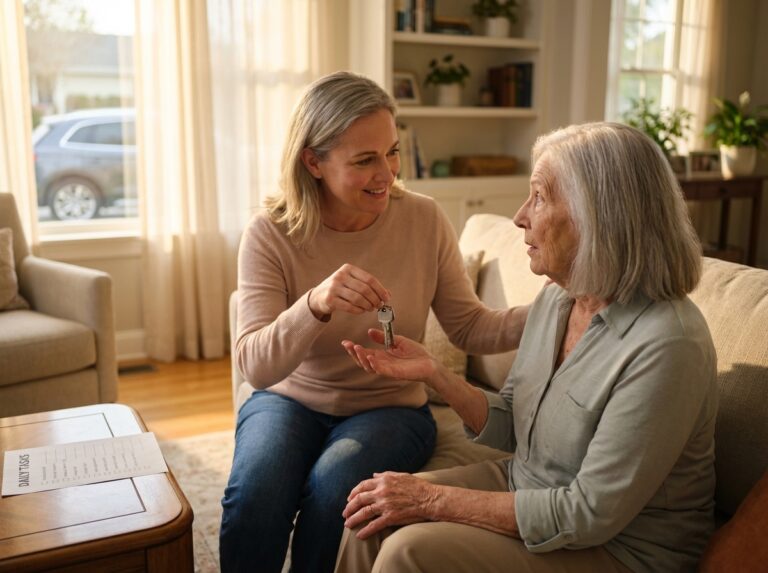
Deciding when and how to move a loved one with dementia to memory care is emotionally complex. This article explores evidence-based communication strategies, practical scripts, timing indicators, legal and safety considerations, and step-by-step planning tools for U.S. family caregivers. Read on for conversation examples that reduce distress, ways to involve the person and family, and resources to guide a compassionate transition.
Recognizing Why Memory Care Might Be Needed
The decision to transition a loved one into memory care is rarely a sudden choice. It is usually the result of a long series of small changes that eventually reach a breaking point. As we move through December 2025, the reality of dementia care in the United States has become more complex. There are now an estimated 7.2 million Americans aged 65 and older living with Alzheimer’s. This number reflects a growing need for specialized support that goes beyond what most families can provide at home. Understanding the specific triggers for this move helps replace guilt with a clear, evidence-based plan.
Clinical and Safety Triggers
The progression of dementia follows a path from mild forgetfulness to total dependence. In the early stages, a person might forget names or misplace keys. However, the move to memory care usually becomes necessary during the moderate stage. This is when cognitive changes start to impact physical safety. One of the most significant triggers is wandering. Statistics show that 60 percent of people with dementia will wander at least once. If a loved one has walked out of the house and forgotten how to return, the risk of injury or exposure increases significantly. In cases of immediate danger—such as wandering into traffic or physical violence—caregivers should not hesitate to call 911. In 2025, many facilities are using AI and sensory tech to manage these risks, but at home, a single incident can be life-threatening.
Medication mismanagement is another critical clinical trigger. In the moderate stages of dementia, the ability to follow complex instructions declines. A person might skip their heart medication or take a double dose of insulin. These errors lead to recurrent hospitalizations. On average, individuals in the moderate stages of dementia face two to three hospital visits per year due to preventable issues. If you notice that pill organizers are consistently wrong or that your loved one cannot explain their medication routine, the home environment may no longer be safe.
Decline in Daily Living Activities
Caregivers often track two types of daily activities to measure decline. Activities of Daily Living, or ADLs, include basic tasks like bathing, dressing, and eating. Instrumental Activities of Daily Living, or IADLs, involve more complex tasks such as managing finances, cooking, and using the telephone. When a person can no longer perform IADLs, they need significant help. When they lose the ability to manage ADLs, they require 24-hour supervision. A noticeable decline in hygiene, such as wearing the same clothes for days or refusing to shower, is a common sign that the current care plan is failing. Weight loss is another red flag. If a loved one loses more than five percent of their body weight in a single month, it often means they are forgetting to eat or can no longer navigate the kitchen safely.
The Impact of Different Dementia Types
The type of dementia your loved one has will influence the timing of the move. Alzheimer’s disease typically features a steady, slow decline in memory and orientation. Vascular dementia often moves in a stepwise fashion. A person might stay stable for a long time and then experience a sudden drop in ability after a minor stroke. Lewy body dementia presents unique challenges, including vivid hallucinations and a very high risk of falls. These individuals often need memory care sooner because their physical stability is compromised. Frontotemporal dementia impacts personality and judgment first. A person might remain physically strong but engage in impulsive or dangerous social behaviors that make home care impossible.
Professional Assessment Tools
To make an objective decision, families should look at standardized assessment scores. Doctors in the U.S. commonly use the Mini-Mental State Examination, or MMSE. A score between 24 and 30 is considered normal. If the score falls below 24, it indicates cognitive impairment. A score below 18 suggests moderate dementia, which is often when memory care becomes the best option. The Montreal Cognitive Assessment, or MoCA, is another tool. It is more sensitive to early changes. A score below 19 usually signals that the person can no longer live independently. Families can also use the AD8, which is a simple eight-question screening tool. If you answer yes to two or more questions regarding changes in your loved one’s memory or judgment, it is time for a formal evaluation by a professional.
Gathering Objective Evidence
It is helpful to collect concrete examples of decline to share with clinicians and other family members. This removes the emotional bias from the conversation. Keep a log of specific incidents with dates. Note every time the stove was left on or a door was left unlocked. Take photos of the living environment if it has become cluttered or unsanitary. Document medication errors and any instances of agitation or aggression. This data is essential when consulting a primary care physician, a geriatrician, or a neurologist. You might also consider hiring a geriatric care manager. These professionals can perform an in-home safety evaluation and provide a formal care needs assessment. They help bridge the gap between medical diagnosis and daily reality.
Caregiver Burnout and Safety
The health of the caregiver is just as important as the health of the patient. Caregiving for a person with dementia is physically and emotionally exhausting. In 2025, the The Cost of Dementia in 2025 is not just financial. It is also measured in the well-being of the 12 million unpaid caregivers in the U.S. Burnout affects up to 70 percent of dementia caregivers within the first two years. If you are experiencing chronic exhaustion, depression, or your own health problems, you cannot provide safe care. A move to a specialized facility is often the only way to preserve the relationship between the caregiver and the loved one. According to Alzheimer’s Disease Facts and Figures, the demand for these services is rising as families realize that professional environments offer better safety and social engagement. Modern trends in memory care focus on creating intentional environments that reduce agitation through better design and clinical partnerships.
Readiness Checklist for Memory Care
Use the following checklist to document the current situation. If you check more than three items, it is time to start touring facilities and discussing a transition plan.
| Category | Observation |
|---|---|
| Safety | The person has wandered or gotten lost in the last six months. |
| Medical | There have been two or more medication errors in the last thirty days. |
| Physical | The person has experienced three or more falls in the last month. |
| Nutrition | There is unexplained weight loss of more than five pounds. |
| Hygiene | The person resists bathing or forgets basic grooming tasks. |
| Caregiver | The primary caregiver feels overwhelmed, angry, or physically ill. |
| Social | The person is isolated and no longer engages in hobbies or conversation. |
Recognizing these triggers is the first step toward a compassionate decision. It allows you to act before a crisis occurs. By using objective tools and tracking specific changes, you can ensure that your loved one receives the level of care they truly need while protecting your own health and the stability of your family.
Preparing Yourself and Your Family Before the Conversation
Preparing for a move to memory care is rarely about a single conversation. It is a series of emotional and logistical steps that happen before you ever sit down with your loved one. You are managing your own grief while trying to keep a family unified. In 2025, with over 7.2 million Americans living with Alzheimer’s, many families find themselves in this exact position. The goal is to move from a state of crisis to a state of prepared compassion.
Emotional Preparation for the Family
Before you talk to anyone else, you must process your own feelings. Caregivers often carry a heavy weight of guilt, feeling as if they are giving up. It helps to reframe the move as a transition to a higher level of support that you can no longer provide alone. Acknowledge that you are grieving the person your loved one used to be. This is often called ambiguous loss. Practicing mindfulness or speaking with a therapist can reduce your own defensiveness. If you are calm, the rest of the family is more likely to stay calm. You cannot lead a family meeting effectively if you are operating from a place of raw exhaustion or anger.
Aligning the Family via a Pre-Meeting
It is vital to have a meeting with siblings or other key family members without the person with dementia present. This prevents a confusing or overwhelming environment for your loved one later. Use this time to align on the goals of care. You should discuss the clinical triggers you have observed, such as wandering or safety risks. If there is disagreement, focus on objective data. Share the results of recent medical assessments or a log of safety incidents. The goal is to reach a 70 percent alignment. You do not need perfect agreement, but you do need a unified front. If siblings are divided, the person with dementia will sense the tension and resist the move even more.
Collecting Essential Documentation
Gathering paperwork early prevents a scramble during a medical crisis. You need a centralized folder, either physical or digital, that includes the following items.
- Power of Attorney for both healthcare and finances.
- Advance directives and living wills.
- A current medication list with dosages and schedules.
- Insurance cards, including Medicare and any Medicaid information.
- Recent clinical assessments like the MMSE or MoCA scores.
- Financial statements to determine the budget for care.
Identifying Roles and Responsibilities
Assigning specific tasks reduces the burden on the primary caregiver. Use a simple matrix to ensure nothing falls through the cracks.
| Role | Primary Responsibility |
|---|---|
| Lead Contact | Main liaison for doctors and facility staff. |
| Financial Manager | Handles bills, insurance claims, and Medicaid applications. |
| Logistics Coordinator | Manages the physical move and downsizing the home. |
| Emotional Support | Coordinates family visits and checks in on the primary caregiver. |
Navigating Cultural and Generational Differences
Acceptance of memory care varies widely across different backgrounds. For example, Hispanic families are statistically twice as likely to prefer keeping a loved one at home regardless of the strain. Some cultures view professional care as a failure of filial piety. Generational differences also play a part. Older adults may associate “facilities” with the institutional warehouses of the past. You must address these feelings with respect. Instead of arguing, focus on the specialized nature of modern memory care. Mention the intentional environments and sensory engagement programs that are standard in 2025. Use phrases like, “This is about getting Mom the expert team she deserves,” rather than, “We can’t handle her anymore.”
Anticipating and Handling Objections
Expect resistance. Common objections include denial of the diagnosis, concerns about cost, or fear of the unknown. When a relative says, “Dad seems fine to me,” they may only be seeing him during his “show-timing” phases. Provide specific examples of the decline. If the concern is cost, reference The Cost of Dementia in 2025 to show that the price of 24/7 in-home care often exceeds memory care fees. Use scripts that validate emotions without backing down on safety.
Scripts for Opening the Planning Conversation
When you start the discussion with other relatives, keep the language direct and soft.
- “I want us all to be on the same page about Mom’s safety. I’ve noticed some changes that worry me.”
- “We all love Dad and want him to be safe. Let’s look at what professional support looks like now.”
- “I am reaching my limit as a caregiver. We need to plan for the next stage before there is an emergency.”
Decision Timeline Template
A structured timeline helps the family move forward without feeling rushed or stalled.
Phase 1 (Weeks 1-2)
Hold the initial family pre-meeting. Identify the lead contact and gather all legal and medical documents.
Phase 2 (Weeks 3-4)
Consult with a professional if needed. Research three potential memory care communities and schedule tours.
Phase 3 (Month 2)
Review the budget and insurance coverage. Narrow the choice to one primary facility and one backup.
Phase 4 (Month 3)
Finalize the move-in date. Begin the downsizing process and prepare the loved one using the communication strategies discussed in the next chapter.
When to Involve Professionals
You do not have to do this alone. If family conflict is high, a mediator can help resolve disputes for an average of $150 per session. Geriatric care managers are excellent for navigating the complex healthcare system. You might also consult clergy if religious values are a central part of the decision. According to 2025 Alzheimer’s disease facts and figures, early planning significantly reduces the trauma of the transition. Involving a social worker or a care manager early ensures that the move is based on clinical needs rather than emotional impulse. Once the family is aligned and the logistics are in place, you can focus on the specific communication techniques needed to talk to your loved one directly.
Communication Techniques That Reduce Distress at Home
Effective communication at home changes as dementia progresses. With 7.2 million Americans living with Alzheimer’s in 2025, family caregivers often find that traditional logic no longer works. The goal shifts from sharing facts to maintaining an emotional connection. This requires a transition from correcting a loved one to validating their reality. Validation therapy reduces agitation by 40 percent in many studies. It involves acknowledging the feeling behind the words rather than the accuracy of the statement. If a person asks for their mother who passed away years ago, do not offer a cold reminder of her death. Instead, ask what their mother was like or what they miss about her. This preserves their dignity and prevents the grief of a fresh loss.
Verbal and Nonverbal Foundations
Simple Sentence Structures
Complex instructions overwhelm a brain struggling with processing. Use short sentences with one idea at a time. Instead of saying it is time to get dressed because the doctor is waiting and the car is outside, try a different approach. Say it is time to put on your shirt. Wait for the action to finish before giving the next step. Avoid using “and also” to link multiple tasks. This reduces the cognitive load on the person.
The Power of Pacing
Slow your speech by at least 50 percent. People with cognitive impairment often need extra time to translate sounds into meaning. After asking a question, count to ten in your head before repeating yourself. This pause allows the person to find their words without feeling pressured. If you must repeat, use the exact same words. Changing the phrasing forces the brain to start the processing cycle all over again.
Nonverbal Cues
Body language often speaks louder than words in dementia care. Maintain eye contact at their level. If they are sitting, you should sit too. A calm tone lowers agitation in 80 percent of interactions. Avoid crossing your arms or sighing. Gentle touch on the hand or shoulder can provide reassurance if the person is comfortable with physical contact. Your physical presence should signal safety rather than authority.
Environmental and Visual Strategies
Signage and Orientation
Visual cues help bridge the gap when memory fails. Place simple signs on doors. A sign that says “Bathroom Here” in large, clear letters aids orientation. This is especially helpful in the moderate stages of dementia. Use pictures alongside words if reading becomes difficult. A photo of a toilet or a plate of food can be more effective than text alone.
Decluttering for Safety
A busy environment creates sensory overload. Removing excess items from counters and floors reduces confusion. CDC home safety studies show that decluttering reduces falls by 39 percent. A simplified space allows the person to focus on the task at hand. Keep frequently used items like a hairbrush or a favorite cup in plain sight to encourage independence.
Encouraging Cooperation with Daily Tasks
Bathing and Personal Care
Resistance to bathing is common. Use phrases that normalize the activity. Instead of asking if they want a bath, say let’s get ready for the day. Use the phrase “Let’s try this together” to increase compliance. This approach works 60 percent of the time because it feels like a partnership rather than a demand. If they refuse, drop the subject and try again in twenty minutes.
Medication and Meals
Offer choices that provide a sense of control. Do not ask if they want their medicine. Ask if they want their medicine with water or apple juice. This yes/no choice structure improves cooperation by 50 percent in moderate dementia. During meals, use high-contrast plates. A white plate on a dark table helps the person see their food more clearly. Limit the number of items on the plate to avoid overwhelming them.
| Dementia Stage | Primary Communication Strategy | Goal of Interaction |
|---|---|---|
| Mild | Reminiscence and identity preservation | Maintain social connection |
| Moderate | Validation and yes/no choices | Reduce frustration and agitation |
| Advanced | Sensory engagement and calm tone | Provide comfort and safety |
The Ethics of Therapeutic Fibbing
Truth-Telling vs. Distress
Therapeutic fibbing is an ethical tool used when the truth would cause unnecessary pain. It is used in 70 percent of dementia communications to de-escalate distress. If a person is insistent on “going home” while they are already there, do not argue. They are likely expressing a need for security. Say the car is in the shop today but we are safe here for now. This addresses the emotional need without causing a confrontation. The goal is to meet them in their current reality.
Moving from Resistance to Collaboration
Example 1. Denial of Assistance
Loved One. I do not need help with my pills. I have done this for years.
Caregiver. You have always been so organized. I would love for you to help me double-check the list today so I can learn your system.
This preserves their role as an expert while ensuring safety.
Example 2. Agitation about Leaving
Loved One. I need to go to work right now.
Caregiver. I hear that you want to get to the office. It is a holiday today, so the building is closed. Let’s have some coffee while we wait for it to open tomorrow.
This validates the urge to work without a direct correction.
Documentation and Professional Support
Tracking What Works
Keep a log of effective phrases and triggers. Note the date and the specific reaction. For example, write that “Let’s try this together” worked for bathing on 12/10/25. Share these notes with other family members to ensure consistency. This reduces the person’s confusion when different people provide care. Use tools like the Zarit Burden Interview to monitor your own stress levels. A score over 40 signals a need for more support.
When to Seek Clinical Help
Reach out to a geriatrician if you notice a significant decline in functional assessments. An IADL score below 4 or an MMSE score below 20 often indicates a need for professional behavioral management. If wandering occurs more than once a week or if weight loss exceeds five pounds in a month, medical intervention is necessary. You can find more information on current trends and statistics at the Alzheimer’s Association website. Clinical partnerships are becoming a standard in 2025 to help families manage high-acuity care at home while planning for future transitions.
How to Broach the Move to Memory Care with Your Loved One
Talking about a move to memory care is one of the hardest things a family caregiver will ever do. It feels like a betrayal of a promise to stay home. It feels like a loss of independence. But in 2025, with an estimated 7.2 million Americans living with Alzheimer’s, this conversation is becoming a standard part of the care journey. You can read more about these numbers in the Alzheimer’s Disease Facts and Figures report. The goal is to move the focus from what is being lost to what is being gained in terms of safety and quality of life.
Starting the Conversation with Dignity
The best way to begin is by involving your loved one as early as possible. Even if their cognitive scores are declining, they deserve to be part of the process. Use “we” language to show that you are a team. Avoid making it sound like a punishment or a decision you made behind their back.
Empathy Openers
I have been thinking about how much work it is to keep up with this big house. I want us to find a place where you can relax and have people take care of the cooking. This frames the move as a luxury or a relief rather than a medical necessity. Another option is to focus on your own needs without blaming them. You might say, I am worried that I am not doing a good enough job keeping you safe here. I want us to look at some places that have more support so I can just be your daughter again instead of your nurse.
Handling Different Reactions
Every person reacts differently to the idea of leaving their home. You should prepare for a range of emotions. Here are some ways to handle common responses.
The Angry Reaction
If they say, You just want to get rid of me, do not get defensive. Try saying, I hear how upset you are. I love you and that is why I am looking for the best care possible. We don’t have to decide everything right this second. Let’s just talk about what would make you feel most comfortable.
The Bargaining Reaction
They might say, I will be better about taking my pills if I can just stay. You can respond with, I know you are trying your best. The problem is that the doctor says you need more help than one person can give. Let’s look at a place that specializes in this so we don’t have to worry about the pills anymore.
The Confusion Reaction
If they don’t understand what memory care is, keep it simple. It is a neighborhood where people help with the things that are getting hard. There are chefs for meals. There are people to help with getting dressed. It is a place where you can be around other people and have fun activities every day.
What Memory Care Looks Like in 2025
It is helpful to provide concrete details about the environment. Modern memory care trends show a shift toward luxury and high-tech safety. A typical day usually starts with a communal breakfast. After that, there are structured activities like music therapy or light exercise. Many facilities now use biophilic design, which means they have lots of plants and natural light to help reduce agitation. In the afternoon, there might be a MIND diet snack or a session in a brain technology center. The staff handles all the medications and safety monitoring. This allows the person to focus on socializing and enjoying their day without the stress of managing a household.
Framing the Move Strategically
Sometimes the truth is too much for a person with dementia to process. In these cases, you can use different frames to make the transition easier.
- The Temporary Trial. Suggest a thirty day stay to see if they like the food and the people. This feels less permanent and less scary.
- The Safety Necessity. Focus on a recent event like a fall or a stove being left on. Say, The doctor is worried about your safety here alone. This place has people who can help twenty four hours a day.
- The Social Club. If they are lonely, focus on the activities. Talk about the gardening clubs or the movie nights. Frame it as a move to a social community where they won’t be alone.
Managing Resistance and Repetition
You will likely have to have this conversation many times. People with memory loss may forget the discussion or insist that nothing is wrong. When they say they are fine, avoid arguing about their deficits. Instead, point to your own observations with kindness. You can say, I know you feel fine, but I noticed you had trouble finding your way back from the store yesterday. It scared me. I want us to be in a place where that won’t happen.
If they ask the same questions over and over, keep your answers consistent and short. Use a calm tone. If the conversation becomes too circular or heated, it is okay to step away and try again later. You are not going to “win” an argument with dementia.
Involving Professionals
Sometimes a family member is the wrong person to deliver the news. If the resistance is too high, bring in a trusted professional. A geriatrician or a dementia care coordinator can explain the medical reasons for the move. Many seniors respect the authority of a doctor more than the advice of their children. You can also ask a staff member from a potential facility to join a meeting. They are trained to handle these transitions and can answer specific questions about daily life. They can also help arrange a trial stay, which often reduces resistance by fifty percent once the person actually experiences the environment.
Planning the transition involves more than just talking. You should visit facilities at different times of the day. Look for places where the staff to resident ratio is around one to six during the day. Observe how the staff interacts with residents. Are they using the person’s preferred name? Do they seem rushed? These details matter for a successful move. A gradual transition plan, where you visit for lunch a few times before the move-in day, can also help reduce the distress of the final change.
Timing Decisions and Practical Steps for Transition
Deciding when to move a loved one into a memory care community is one of the most difficult choices a caregiver faces. Many families start by adding incremental supports at home. This might include hiring a home health aide for a few hours or installing smart home sensors. In 2025, an estimated 7.2 million people in the United States live with Alzheimer’s. The cost of this care is rising. Total annual expenses for dementia in the US have reached 781 billion dollars this year. You are likely balancing the desire to keep your loved one in a familiar place against the reality of their increasing needs.
Waiting too long to make a transition often increases safety risks. You should watch for specific signs that home care is no longer enough. Wandering is a major red flag. About 60 percent of people with Alzheimer’s will wander at some point. If your loved one has left the house unsupervised even once, the risk of injury is high. Frequent falls are another indicator. If you notice three or more falls in a single month, the home environment may be unsafe. Physical health changes like losing more than 10 percent of body weight suggest that nutrition and medication are not being managed well. In 2025, many communities use AI for fall risk assessments and cognition tracking. These tools help staff provide a level of supervision that is hard to maintain at home.
A short term trial is a helpful way to test the waters. These respite stays usually last between 14 and 30 days. They give your loved one a chance to experience the social environment and the daily routine. It also provides you with a necessary break to recover from caregiver burnout. Research shows that a trial stay can reduce resistance to a permanent move by 50 percent. It allows the transition to feel less like a final goodbye and more like a new type of support.
Choosing the right facility requires a detailed look at their operations. You should ask about staff training and ratios. A good standard in 2025 is a daytime ratio of one staff member for every six residents. At night, this might shift to one for every ten. Ask if the staff receives specific dementia certifications. Inquire about their wandering protocols and how they use technology to keep residents safe. Look for communities with state survey ratings above 90 percent compliance to ensure high-quality care. Many modern facilities now use biophilic design. This includes nature elements and sensory engagement areas to reduce agitation. You can find more about these trends in recent industry reports on memory care luxury and acuity.
Finances are a major part of the planning process. Private pay for memory care in 2025 averages between 6,000 and 10,000 dollars per month. Long term care insurance can cover a large portion of this cost after an elimination period of about 90 days. For wartime veterans, the VA Aid and Attendance benefit provides up to 2,727 dollars monthly to help pay for care. Medicaid is another option for those with limited assets. In most states, an individual must have less than 2,000 dollars in countable assets to qualify. It is important to note that Medicare does not cover custodial care, such as room and board in a memory care community; it only covers medical services. Families must rely on private funds, insurance, or Medicaid waivers. Be aware that Medicaid waitlists for memory care waivers often last 6 to 12 months. The cost of dementia in 2025 continues to be a significant burden for American families.
Legal preparations must happen as early as possible. You need a Power of Attorney for both healthcare and finances. This document allows you to make decisions when your loved one can no longer do so. Only about 30 percent of adults over 65 have completed their advance directives. Without these, you might have to go through a lengthy court process to gain guardianship.
The medical handoff is vital for a smooth transition. Create a document that summarizes all current medications and dosages. Include a list of recent behaviors such as sunndowning or specific triggers for agitation. Describe their preferred routines. If they like to wake up at 8 AM or enjoy a specific type of tea, the staff needs to know. This helps maintain their identity and comfort in the new setting.
Logistics for the move involve significant downsizing. Most families find they need to sell or donate about 70 percent of non essential items. Focus on bringing things that provide comfort. This includes five to seven changes of comfortable clothes and a favorite blanket. Limit the number of family photos to about ten to avoid clutter. When they arrive, label drawers with simple signs like “Socks” or “Shirts” to help them stay oriented. To stay involved after the move, plan visits around the facility’s activity calendar, such as music sessions or meals, or consider joining the family council to stay informed about community operations.
Sample Transition Timelines
An immediate safety move happens within 0 to 7 days. This is usually triggered by a crisis like a hospital discharge or a dangerous wandering incident. A planned transition takes 1 to 3 months. This allows time for multiple facility tours and financial planning. A trial stay lasts about 30 days and serves as a bridge to permanent care.
Notification Template for Family
You can use this text for an email or a phone script.
Subject: Update on care for [Name]

I am writing to let you know that we have decided to move [Name] to a memory care community on [Date].
This decision was made to ensure their safety and to provide professional support for their needs.
The community is called [Facility Name].
We will share more details about visiting hours once they have settled in.
Planning with compassion means acknowledging that this move is a form of care. It is not a failure of your commitment. By choosing the right time and preparing the logistics, you are protecting the well being of your loved one as well as your own health.
Final Thoughts and Next Steps
Making the decision to transition a loved one into memory care is one of the most difficult steps a caregiver will ever take. It is a choice rooted in safety and the desire for a better quality of life. As of late 2025, the landscape of dementia care in the United States is changing rapidly. With an estimated 7.2 million Americans aged 65 and older living with Alzheimer’s, the demand for specialized support has never been higher. This final chapter brings together the strategies discussed previously to help you move forward with confidence and peace of mind.
Planning the Move and Trial Stays
Many memory care communities now offer trial stays, which usually last between 14 and 30 days. This is an excellent way to see how your loved one adjusts to the new routine without the pressure of a permanent commitment. During this time, the staff can observe their behavior and social interactions. You should use this period to evaluate the staff-to-resident ratios. A good standard in 2025 is one staff member for every six residents during the day. Observe how the environment uses biophilic design or sensory engagement to reduce agitation. These intentional design elements are becoming standard in modern facilities to help residents feel more at ease.
Resources for Continued Support
You do not have to navigate this process alone. There are national organizations and local agencies ready to help with up-to-date information. For 24/7 support, you can contact the Alzheimer’s Association at 800-272-3900. They provide counseling and can connect you with local support groups. The Eldercare Locator at 800-677-1116 is another essential resource for finding Area Agencies on Aging in your specific zip code. These agencies provide free assessments and can explain local Medicaid waiver programs. For those interested in the future of care, reading about how 6 Senior Living Leaders Predict Memory Care’s Future can provide insight into the luxury and high-acuity trends shaping the industry today.
Preserving Dignity and Staying Connected
The move to memory care is a change in the location of care, not the end of your relationship. You can remain a vital part of their life by visiting regularly and participating in facility activities. Bring familiar items like a favorite blanket or a music playlist they enjoy. Focus on being present in the moment rather than worrying about whether they remember the details of your last visit. Your role shifts from being a primary physical caregiver to being an emotional advocate. This shift allows you to focus on the quality of your time together. Remember to seek help for your own stress. Caregiver burnout is real, and taking care of yourself is the only way you can continue to support your loved one effectively. You have done the hard work of planning with compassion. Now, trust the process and the professional team you have chosen to help your family through this next chapter.
Sources
- 'We're Back, Baby': 6 Senior Living Leaders Predict Memory Care's … — What are two of the biggest memory care trends you're watching in 2025? Convergence of high-acuity care and luxury: We're seeing licensed …
- The Cost of Dementia in 2025 – April 23, 2025 – USC Schaeffer — In 2025, there are 5.6 million people living with dementia in the United States, with 5.0 million ages 65 and older. Dementia refers to a group …
- Dementia is costing the US $781 billion, and 30 percent of that cost … — Almost 6 million people are living with dementia in the United States in 2025, costing the country $781 billion, $232 billion of which is spent …
- Alzheimer's Disease Facts and Figures — An estimated 7.2 million Americans age 65 and older are living with Alzheimer's in 2025. · About 1 in 9 people age 65 and older (11%) has Alzheimer's. · Almost …
- [PDF] Caregiving in the US 2025 – Research Report — 2 Caregiving in the US 2025 that their care recipient has Alzheimer's, dementia, or another memory-related impairment. Caregivers under 50 are more likely …
- 2025 Alzheimer's disease facts and figures – PMC – PubMed Central — An estimated 7.2 million Americans age 65 and older live with Alzheimer's dementia today. This number could grow to 13.8 million by 2060.
- 2025 Alzheimer's disease facts and figures — An estimated 7.2 million Americans age 65 and older live with Alzheimer's dementia today. This number could grow to 13.8 million by 2060.
- 2025 NIH Alzheimer's Disease and Related Dementias Research … — An estimated 7.1 million Americans are currently living with symptoms of Alzheimer's, and it is predicted that more than 13.9 million will be …
- Memory Care Facility Statistics – Rosewood Nursing — The growing demand for memory care services is projected to compel the establishment of nearly 1 million new senior living units by 2040.
Legal Disclaimers & Brand Notices
The information provided in this article is for informational purposes only and does not constitute medical advice, diagnosis, or treatment. Always seek the advice of your physician or other qualified health provider with any questions you may have regarding a medical condition, clinical assessments, or the transition to specialized care. Never disregard professional medical advice or delay in seeking it because of something you have read in this article.
All product names, logos, and brands are property of their respective owners. All company, product, and service names used in this article are for identification purposes only. Use of these names, logos, and brands does not imply endorsement.